
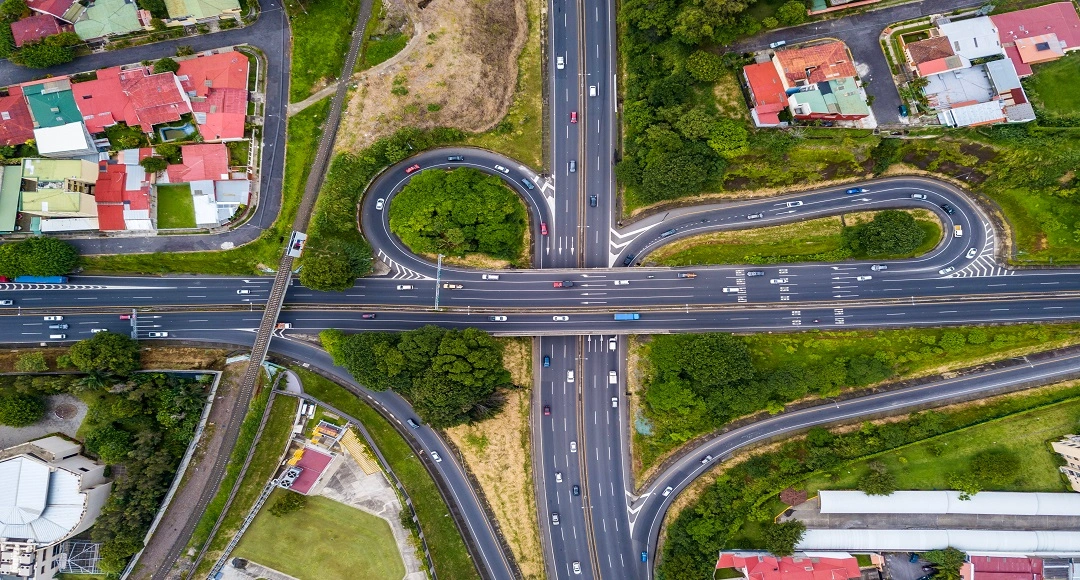
Priority Infrastructure Plan: a city, municipality, or organization can only be as strong as its infrastructure. Economic growth falls flat when roads start to erode, water systems malfunction and broadband accessibility trails. But with budgets always tight and wish lists forever long, how do leaders choose what to build (or fix) first?
This may know it as a Priority Infrastructure Plan (PIP).
If you are a city planner or municipal leader or project manager, you already know. You are working with infrastructure that is getting older, just as populations are increasing and climate change looms over the nation. It requires a strategy that not only reads well but comes to life as fully funded, completed projects.
This ultimate guide will take you step by step on how to develop a Priority Infrastructure Plan that works, gains buy-in from stakeholders, gets funded and ranks near the top of your communitys success measures.
Table of Contents
- What is a Priority Infrastructure Plan (PIP)?
- Why Most Infrastructure Plans Fail
- The Core Pillars of a Successful PIP
- Step-by-Step Guide: How to Create a Priority Infrastructure Plan
- Step 1: The Baseline Asset Assessment
- Step 2: Defining Strategic Objectives
- Step 3: Developing the Prioritization Matrix
- Step 4: Stakeholder Engagement & Public Buy-in
- Step 5: Funding and Financial Modeling
- Step 6: Drafting the Implementation Roadmap
- Step 7: Monitoring, Evaluation, and Agile Adaptation
- The Role of Modern Technology in Infrastructure Planning
- Common Pitfalls and How to Avoid Them
- Conclusion
- Frequently Asked Questions (FAQs)
1. What is a Priority Infrastructure Plan (PIP)?
What is a Priority Infrastructure Plan? A Priority Infrastructure Plan is an evidence-based, strategic planning framework used by all levels of government (or large organizations) to identify critically needed infrastructure projects, prioritize them, and sequence delivery over the next 5 to 20 years.
However, a PIP is very different from a comprehensive master plan — generally a far too visionary wish list. This helps fill the gap between there being demand from a community and what that community can actually afford and execute on. It answers three fundamental questions:
- What is our most immediate need?
- How will we pay for it?
- When will it be built?
It covers everything from upgrading a wastewater treatment facility to expanding a mass transit line to deploying municipal fiber-optic internet and ensures capital is allocated where it will do the most for public safety, economic vitality, and quality of life.
2. Why Most Infrastructure Plans Fail
To ensure we build a plan that works, we need to figure out why so many gather dust on a shelf. The tomb of good municipal planning is littered with documents that fell victim to either one of the attritional three deadly sins almost immediately:
- The “Squeaky Wheel” Syndrome: Projects get built based on who complains the loudest (politician or community group) and not data.
- Funding Gap: 500 million in projects are summarized but the municipality is only capable of borrowing 50 million as there is no logical plan on how to fill this gap.
- No Public Agreement: The plan is created in a vacuum. When it finally does get to the public, huge NIMBY (Not In My Backyard) resistance ensues and there are multiple lawsuits.
- Static Thinking The Plan: We assume the world will not change But when a pandemic hits, or a big employer leaves town the plan goes out the window.
You need to actively design these roadblocks out of your process from day one if you want a plan that works.
3. The Core Pillars of a Successful PIP
A successful Priority Infrastructure Plan that survives changing political regimes and budgetary constraints requires four steadfast foundations:
A. Data-Driven Objectivity
Your plan is not based on gut feeling. It needs to be anchored in dry metrics: traffic counts, incidence of pipe deterioration, population-growth projections and the economic impacts of that growth. The data should provide a defense for your work when it is challenged.
B. Economic Reality
A PIP is simply a financial document. It is a mastery of the municipal bonding capacity, federal and state grant availability, and Public-Private Muscular Partnerships (PPP).
C. Equity and Inclusion
For starters, infrastructure hasn’t generated equal opportunity throughout history. This means a PIP fit for the modern world must secure that underserved communities get their share of upgrades. This is not only a moral obligation: increasingly, federal and state grants — for example, the Charlotte B. Olin Award from Massachusetts’ Department of Elementary & Secondary Education — require evidence of equity to qualify for funding.
D. Resilience and Sustainability
We design for a future of extreme weather events contending with resource scarcity. Projects must be appraised on their carbon cost and resilience to flooding, heatwaves and other climate shocks.
4. Step-by-Step Guide: How to Create a Priority Infrastructure Plan
Building the plan is a marathon, not a sprint. These seven steps will help your dream find its way from blueprint to ribbon-cutting.
Step 1: The Baseline Asset Assessment
If you do not know where you are, you cannot know where to go. The first step in any transition is a full audit of your existing infrastructure.
What to do:
- Step: Establish an Asset Inventory: Take stock of every road, bridge, water main, public building and transit vehicle.
- Nearest Assets Evaluate: For each asset on a physical condition, customers use an A through F grading system. If needed, introduce third-party engineering firms to guarantee impartial grading.
- Step: Find “Remaining Useful Life” or RUL: Estimate the number of years remaining for every Asset until total failure.
- Map it out: Use GIS (Geographic Information Systems) to plot this data. When you see a swath of “F-rated” water mains in one neighborhood, the case for prioritization seems immediately apparent.
Step 2: Defining Strategic Objectives
Your region’s ultimate objective An important port city might emphasize freight mobility; a bustling suburban town may prioritize schools and commuter transit.
What to do:
- Connect to Broader Goals: Ensure your PIP supports your region’s Comprehensive Plan, Climate Action Plan and Economic Development Strategy.
- So here are the first steps to clarify your direction of action: Set SMART Goals (Specific, Measurable, Achievable, Relevant and Time-Bound) “Improve roads” is not SMART; “Reduce potholes on all arterial roads by 40% over the next 3 years for improved freight movement,” however, is.
Step 3: Developing the Prioritization Matrix (The Magic Sauce)
Building your matrix: Create 5 to 7 high level criteria categories then assign a weight to them based on your objectives. For example:
How to build your matrix: Establish 5 to 7 key criteria categories and assign them a weight based on your strategic objectives. For example:
- Public Health & Safety (Weight: 25%): Does this project remove an imminent risk to public health and safety (example: lead pipes or a structurally deficient bridge)?
- Economic Development (Weight: 20%): Will this Qube will result in jobs, business relocations or re-investments or improvements to freight mobility?
- Regulatory Compliance (Weight: 15%): Is project federally or state mandated law (i.e., EPA requirements for wastewater)?
- Sustainability & Resilience (Weight: 15%): Would it assist in curbing carbon emissions or provide flood protection?
- Social Equity (15%): Does it primarily help neighborhoods that have been historically neglected and disenfranchised?
- Cost & Funding Readiness (Weight: 10%): Will grant money be available now? Do you already have your engineering designs in place? there grant money available right now? Are the engineering designs already complete?
Add some originality: copy this matrix to a city council or board and then explain it simply. I scored these over 100 points. The score determines how far into the future it gets built. Period.” And that sweeping structure makes it nearly impossible for an elected official not to fund a desperately needed public safety project instead of a national vanity project in their district.
Step 4: Stakeholder Engagement & Public Buy-in
A plan devoid of public support is a moribund plan. From the start and as often as possible, you need to take the community along with you.
What to do:
- Stop talking AT people: Host Interactive Town Halls Use interactive tools. Distribute “fake money” to attendees and ask them to invest it in different types of infrastructure. This is an education of the public with respect to the limits of a budget.
- Part of our ads were digital surveys: allowing us to target those who may not be able to attend 7 pm town halls through social media.
- Get the Business Community Involved: Chambers of Commerce and local businesses want to know how your plan will impact their productivity.
Step 5: Funding and Financial Modeling
Now comes the toughest part: you have to pay for it. Promising Priority Infrastructure Plan tie specific projects with specific funding sources.
Key Funding Streams to Explore:
- Pay-As-You-Go (Cash): Fund i.e smaller / recurring projects using current tax revenues.
- Municipal Bonds: Taking loans for capital expenditure projects, generally paid back over 20-30 years.
- Federal and State Grants: Assign a team to search for infrastructure bills and competitive grants. Projects with high scores should be right in the sweet spot of your matrix to win these.
- Public-Private Partnerships (PPPs): where the government enters into a partnership with private companies to construct, finance and/or operate infrastructure, such as toll roads or broadband networks.
- Value Capture: If a new transit line elevates property near the line, capture some of that increase in taxes to pay for the transit project.
Step 6: Drafting the Implementation Roadmap
You have your order of preference and you have the funds as well. So, you need to sequence the work now.
What to do:
- Logically: if you are digging up Main Street to replacing a sewer line then do the broadband fiber install and road repaving at the same time! Save millions with “dig once” policies and curb the ever-looming ire of the public.
- Develop a Schedule (Gantt Chart): Outline the planning, design, purchase and construction timelines for years 1-5.
- Assign Accountability: Identify the department and project manager that will be responsible for each individual project.
Step 7: Monitoring, Evaluation, and Agile Adaptation
The ink may have dried, but the work is far from over. The real world is messy. Inflation, labour supply chains and emergencies.
What to do:
- Your PIP is a living document, not an annual review. At least once a year, prior to the annual budget cycle.
- Monitor KPIs (key performance indicators) — Are projects completed on time and budget? If not, why?
- Be Flexible: If a major grant recently fell through, push that project further down the list of priorities and bring up their next “shovel ready” project that has funding.
5. The Role of Modern Technology in Infrastructure Planning
Gone are the days of planning out infrastructure with paper maps and highlighters. To create a plan that makes your plan number 1 in effectiveness, you need to use modern tech:
- Digital Twins: Build existing city replica Before you can spend a cent, though, we put together simulations of the effect of closing a bridge or adding a new transit line.
- Predictive Analytics & AI: AI can examine decades of repair data to forecast precisely when a water main is likely to rupture, enabling you to replace it before it becomes an issue.
- IoT Sensors: Embed sensors within bridges and roads to monitor structural health live-time; return continuous data streaming your baseline assessment.
6. Common Pitfalls and How to Avoid Them
In fact, the best-laid plans often go awry. Watch out for these traps:
- Overlooking Maintenance of New Construction: Politicians often love to cut ribbons on new buildings, but they never really cut a ribbon for an HVAC replacement. Your strategy has to be built on keeping the lights on for your existing assets and making sure you don’t have a catastrophic failure.
- Inflation Underestimation: Infrastructure projects have a long lead time. The same endeavour, with an expected value of $10 million today, could amount to $14 million in three years. Create strong contingency reserves on financial models.
- Over-Promising: When you tell the public a project will be ready in two years and it takes five, they lose trust. Under-promise on timelines and over-deliver.
7. Conclusion
Developing a Priority Infrastructure Plan that works is not creative writing; it is discipline. It needs to face the cold-eyed reality of aging soldiers and hard budgetary decisions, as well as enlist the public with… transparency.
If you can follow the steps above root your decisions in data, focus on a tight prioritization framework and map realistic funding sources -your infrastructure wishlist become an actionable living roadmap. Not only will you be planning for the future, but you will also have the opportunity to build it.
8. Frequently Asked Questions
Q: How often should a Priority Infrastructure Plan be updated?
A: If that sounds familiar our question is more of, Q: Do you think a PIP is a living document? It will be reviewed yearly for minor updates to sync with the municipal budget cycle, and fully revised every 3 to 5 years in light of demographic changes, economic realities, or projects already completed.
Q: Capital Improvement Plan (CIP) outlays the actions we want to take to improve our quality of life; however, a PIP assesses the health of that plan.
A: Very closely, but a PIP is usually the strategic pre-cursor to a CIP. The Priority Infrastructure Plan takes the range of things that need to happen and what needs to happen (the strategy and ranking). Authorization to spend the first few years of PIP funds comes through the Capital Improvement Plan, which is the real budget document.
Q: What about emergency infrastructure failures not included in the plan?
A: A strong PIP has a fund set aside for catastrophic unexpected failures (a sinkhole, a spontaneous bridge closure). Due to the simple clear ranking of your other projects from their individual scores, you can hit pause on those lower priority projects if an emergency needs a reallocation of funds.
Q: How can small municipalities with small budgets create a PIP?
A: Who needs a PIP more than anyone, you would say? They don’t need high-priced consultants, simple Excel-based scoring matrices will do fine and for free mapping assistance local planning commissions are available to help.
Q: Please elaborate why community engagement is crucial for infrastructure?
A: Infrastructure impacts all facets of people’s lives from their commutes to their water, to their property values. Without proper buy-in at the community level, projects can have to face immense opposition, lawsuits and political pressure knocking back on plans going nowhere fast while costs potentially skyrocket. Whereas, engagement engenders trust and clears the way for execution.
Read More: Oncepik: Boost Your Creative Workflow with These 10 Pro Tips