
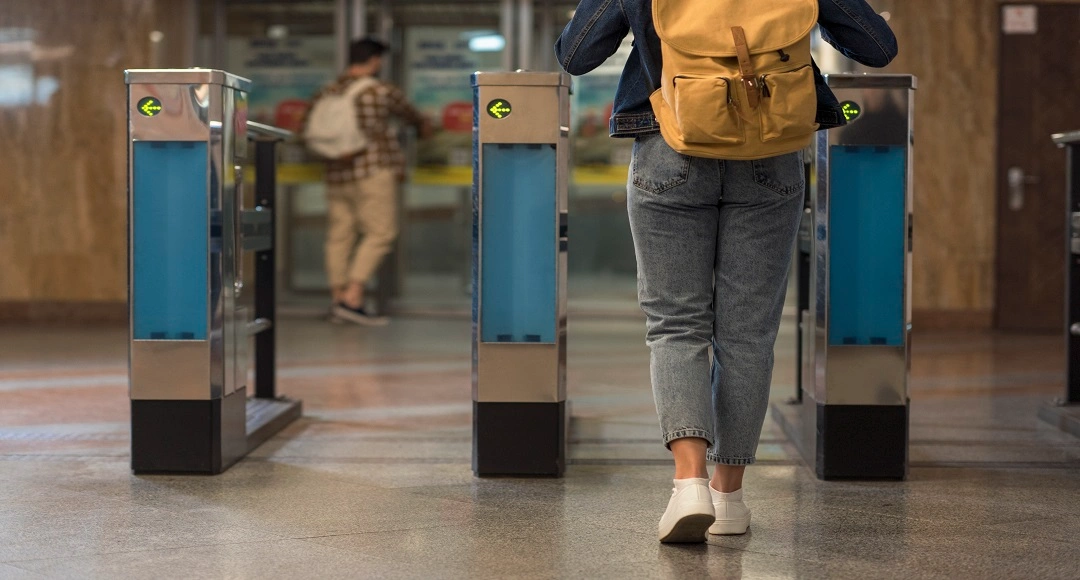
Accurate visitor reporting depends on more than asking people to sign in. In busy workplaces, public facilities, construction sites and managed buildings, visitor records need to reflect who entered, when they entered, which area they accessed and whether they left as expected. Speed gates support this by turning pedestrian movement into structured access data, reducing guesswork and helping security, operations and building management teams rely on cleaner records.
Captures Entry Events At The Source
Visitor reporting becomes more accurate when the entry point itself records movement. Instead of depending only on reception notes, manual sign-in sheets or staff memory, speed gates create a controlled point where every authorised passage can be logged. This is useful on sites where contractors, delivery personnel, visitors and employees may all move through the same lobby or access zone.
When paired with visitor management software, swipe cards, QR codes or temporary credentials, security speed gates for controlled pedestrian access can help link each entry event to a specific person or visitor profile. That gives reporting teams a clearer record of actual movement, not just intended visits.
Reduces Manual Sign-In Errors
Manual reporting often breaks down because people forget to sign in, write unclear details, use the wrong time, or leave without signing out. In higher-traffic environments, reception teams may also be too busy to check every detail. These gaps can affect visitor numbers, emergency registers and compliance records.
Speed gates reduce reliance on manual input by making access conditional on a valid credential or approved visitor pass. The system records the access event automatically, which helps limit incomplete entries and inconsistent formatting. For building managers and security teams, this creates a more dependable audit trail than paper-based processes alone.
Separates Visitors From Staff Movement
Visitor reporting can become misleading when staff, contractors and visitors are not properly separated in the data. A basic door counter may show how many people passed through, but not who they were or why they were there. That may be enough for rough foot traffic analysis, but not for accurate visitor reporting.
Speed gates can connect access events to user categories. Staff may use permanent cards, contractors may use time-limited credentials, and visitors may use single-use passes issued through reception or a digital check-in system. This distinction helps teams report on visitor activity specifically, rather than mixing all pedestrian movement into one broad count.
Supports Time-Stamped Audit Trails
Accurate reporting is not only about counting visitors. It also involves knowing when someone arrived, how long they stayed and whether their access matched the approved visit window. Time-stamped records are useful for investigations, tenancy reporting, workplace safety checks and after-hours access reviews.
Speed gates create a clear audit trail: a chronological record of system activity. If a visitor enters at 9:05 am, accesses a controlled zone and exits later, those events can be compared against their scheduled appointment or contractor permit. This helps identify overstays, unauthorised re-entry attempts or gaps where a visitor may not have exited through the expected route.
Improves Emergency Roll Call Data
In an emergency, visitor data needs to be current. A sign-in sheet that has not been updated, or a register that misses departures, can create confusion during evacuation checks. Emergency teams may waste time looking for someone who has already left, or assume someone has left when they are still inside.
When integrated with access control and visitor management systems, speed gates can improve mustering data by recording both entry and exit events. This gives security and site management teams a stronger basis for knowing who is likely to be on-site at a given time.
Research on real-time building occupancy estimation during emergency egress found that sensor readings across thresholds such as entrances and exits can help estimate how many people are in different areas of a building, supporting first responders with egress management, search-and-rescue and emergency response tactics. In government buildings, mining facilities, supermarkets, roadwork compounds and construction sites, that same principle makes accurate entry and exit data valuable for safer incident response.
Highlights Unusual Access Patterns
Speed gates can also improve reporting by showing patterns that manual registers often miss. Reports may reveal repeated denied access attempts, visitors entering outside approved time windows, or unusual spikes in traffic through a particular access point. These insights help teams refine security procedures and identify where visitor processes need tightening.
This is valuable for multi-tenant buildings, restricted work zones and public-facing sites where visitor movement can change throughout the day. Rather than relying on assumptions, managers can use access data to review actual behaviour and adjust staffing, access permissions or entry procedures.
Reliable Records Start At The Entry Point
Speed gates enhance visitor reporting accuracy by making access controlled, measurable and easier to verify. They reduce manual errors, separate visitor activity from general foot traffic, create time-stamped records and support stronger emergency visibility. For organisations managing busy or security-sensitive sites, the main benefit is not just smoother entry, but better confidence in the data behind every visitor report.
Read More: Priority Infrastructure Plan: How to Create That Actually Works