
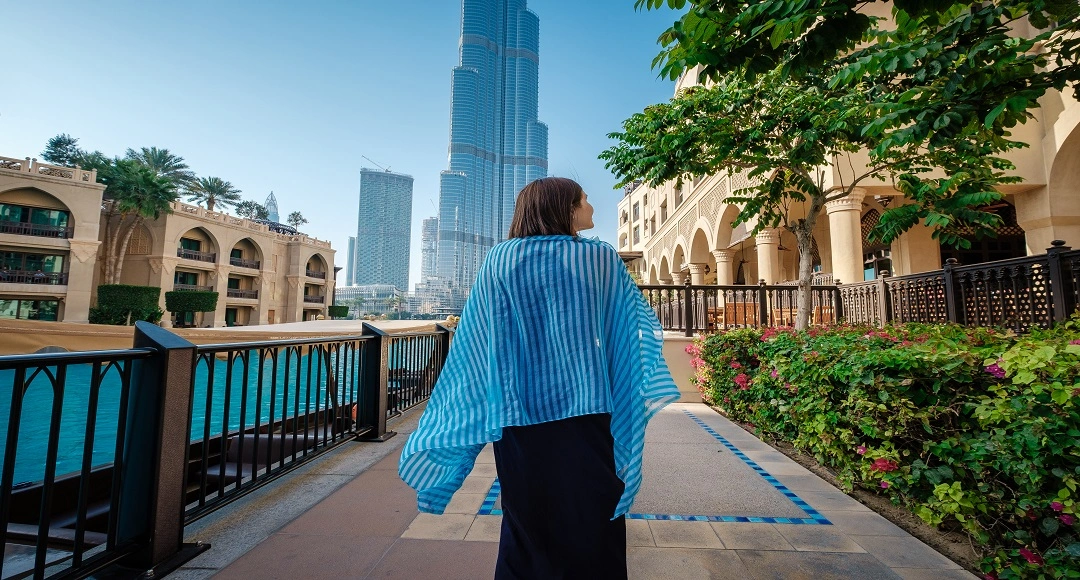
Dubai’s residential market has settled into something steadier and more selective this year. Gone is the frantic pace of the last few cycles. In its place is a market shaped by genuine end users and serious institutional money, with around 70% of ready property purchases now made in cash rather than through a mortgage. That cash cushion matters, because it means the market can absorb interest rate shifts and global shocks without the forced selling that hits more leveraged cities. With Dubai’s population expected to hit 4.7 million by year end, most buyers eventually land on the same fork in the road: apartment or villa. Here’s how the two compare.
Two Markets, Two Sets of Rules
It helps to think of apartments and villas as two separate markets that happen to share a city.
Villas
Villas and quality townhouses are constrained by land. Building low density communities takes large plots, and those are getting harder to find and more expensive, particularly anywhere central. That scarcity has pushed villa values up sharply, with annual capital growth running around 17.7% in 2026.
Apartments
The market for apartment works completely different and the key factor is supply which is more elastic because developers can build up rather than out, comprising one tower of multiple units in places like Downtown Dubai, Business Bay, or JVC. It reduces the marginal cost of development and an advantage for the developer and buyer, the prestige location in a price lesser than what they have to pay to build or buy a villa. This vertical supply keeps price growth in check but also increase the rental yield as of various factors from the location of the tower to the location of the unit in the tower as it directly impacts the views it offers, therefore, some areas offer rental yield of up to 8 to 10% depending upon the long or short-term rental contracts.
What Each Option Actually Costs
Apartments
Entry points vary a lot depending on location but it is more rental yield focus real estate investment.
- Areas offering pocket-friendly apartment investment options include Dubai South, International City, and Dubai Investment Park with a starting price around AED 500,000 to AED 650,000.
- Mid-tier areas include JVC, JVT, and Arjan where prices typically sit between AED 700,000 and AED 1.2 million.
- On the luxury side or top-end apartment living, Dubai Marina or Downtown apartments range from AED 1.8 million to AED 4.5 million.
Villas
Villas ask for more capital upfront but bring different growth potential to the table.
- Dubailand and Damac Hills 2 are among the affordable areas featuring villas starting around AED 1.8 million to AED 2.5 million.
- Arabian Ranches and Dubai Hills lie in the mid-to-heig-end range, typically starting from AED 8 million to over AED 20 million
- Palm Jumeirah and Emirates Living deliver the ultra luxury pocket for HNWI to buy.
Lifestyle: What Daily Life Actually Looks Like
The property type you choose shapes more than your finances. It shapes your routine.
Apartment living usually comes with an urban living such as Downtown Dubai or Dubai Marina where lifestyle is connected to the public transport and daily amenities and facilities are within walkable reach. Most importantly, building management deals with the maintenance and security so the residents don’t have to. Above all, these residential units come with gyms, pools, and other amenities within the building where residents don’t have to step out the development for these needs.
On the contrary, villas in Dubai are usually in gated communities, except a few exceptions where daily facilities like healthcare, pharmacies, grocery stores are not within a walkable reach rather it requires a car. Most of the units are built in suburban communities so the overall living experience is not urban as in apartments but it comes with perks of privacy which lacks in apartments. Places like Arabian Ranches or The Meadows come with their own schools and parks, though residents typically rely more on their car and face longer trips into the business districts.
The Real Cost of Ownership
Purchase price is only part of the picture. Ongoing costs differ a lot between the two, and they’re worth knowing before you commit.
Service charges in Dubai, which cover the upkeep of shared spaces, are tracked through the Mollak system under RERA.
- Apartments typically carry higher per square foot charges, from AED 10 to AED 30, because that fee covers shared infrastructure like lifts and central chiller systems.
- Villas run lower, usually AED 2 to AED 6 per square foot, since there’s far less shared indoor space to maintain.
That said, villa owners take on everything inside their own plot. Annual maintenance contracts, covering things like HVAC servicing, pool upkeep and landscaping, typically run from AED 15,000 to over AED 35,000 depending on size. Utility bills tend to run higher too, largely because of garden irrigation and pool filtration.
Where Infrastructure is Pointing
Transport projects are shaping where the smart money is heading in 2026. The expansion of Al Maktoum International Airport is drawing attention to Dubai South and Expo City Dubai, while the Metro Blue Line, due in 2029, is already lifting interest in Dubai Creek Harbour and International City.
- Emerging transit corridors are offering some of the strongest yields in the city, with select budget areas projecting returns as high as 9.06%
- Ready villas in established master communities remain a reliable choice for anyone prioritising capital preservation, thanks to the ongoing scarcity of landed property centrally
Strengths and Challenges at a Glance
Villas and Townhouses
- Strong capital appreciation and genuine privacy, with dedicated outdoor space for families
- Solid defensive value in established communities where supply is structurally limited
- Higher entry costs, full responsibility for structural maintenance, and typically longer commutes
Apartments
- Higher gross rental yields and central locations near transit
- Lower buy in costs, making them a natural fit for first-time buyers and portfolio diversification
- Slower capital growth and higher recurring service charges per square foot
Closing In!
There is no universal answer to state what is right, an apartment or a villa because it completely depends on the requirements of the buyers in terms of their buying goals and budget. A first-time buyer with a tight budget would have to buy an apartment instead of a villa even though he wants to; on the contrary an high-net-worth individual who affords to buy a villa on Palm Jumeirah buys apartments in JVC as an investment to generate rental return in passive income or earn capital appreciation from an off-plan purchase. Therefore, the answer cannot be one size fits all; it completely depends on one’s budget, priority, and most importantly, goal, either investment or end-use. But the industry experts have an answer specific to the investment goals; villas have proven to generate higher capital appreciation when purchased off-plan than apartments, and smaller units like studio and one-bedroom apartments generate higher rental yields than large villas.
Read More: Glamping Economy: Market Size, Profitability & Future Trends