
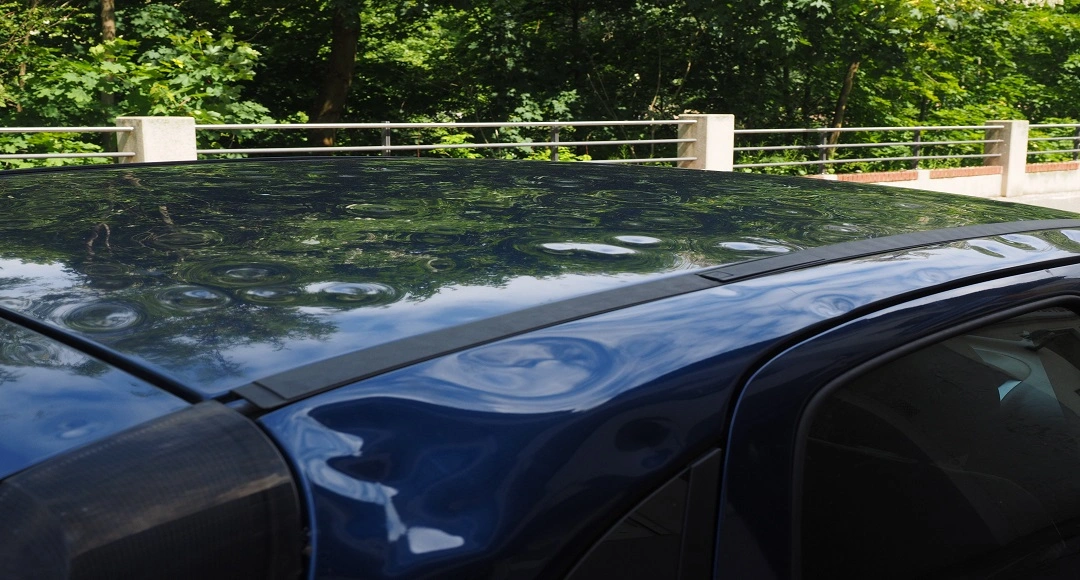
A single spring storm can flood a regional auction yard with hundreds of freshly totaled vehicles. Insurance companies, working through claims backlogs, apply standard total-loss formulas and write off cars that drove perfectly fine the day before.
In this post, we are going to cover how the 2026 hail damage market works, why paintless dent removal changes the economics for private buyers, and how to identify the right units when you buy a hail-damaged car at auction.
The Economic Logic of Cosmetic Claims
In 2026, the definition of a totaled car has more to do with labor rates than structural integrity. Insurance companies use complex algorithms to determine when a car is a total loss, and for hail, these numbers are often skewed by the sheer quantity of dents. While a single dent is a minor fix, 200 tiny dimples on a roof can lead an insurer to write off a perfectly functional, low-mileage vehicle. This creates a significant supply of hail-damaged cars for sale that possess a clean drivetrain and safety structure but have a branded title.
For the savvy buyer, this represents a unique arbitrage opportunity. While the insurer must account for the retail cost of replacing panels or a full respray at a franchised body shop, a private owner can choose more surgical methods. We often see bidders targeting hail-damaged cars specifically because they understand that the “damage” is a skin-deep discount that doesn’t impact the vehicle’s longevity or safety.
The Paintless Dent Repair (PDR) Revolution
The primary driver behind the viability of this segment is the maturity of Paintless Dent Repair (PDR) technology. In 2026, PDR has become the standard for professional hail restoration. Using specialized tools to massage the metal back to its original shape from the underside of the panel, technicians can restore a vehicle without sanding, body filler, or repainting. This is critical because it preserves the factory finish, which is more durable and corrosion-resistant than any aftermarket paint job.
When searching for a hail-damaged car auction, we recommend focusing on units with intact paint. If the hail was large enough to crack the paint, the repair complexity and cost increase. However, PDR can often restore vehicles with a golf-ball texture and original paint to a 95% or 100% “like-new” appearance for a fraction of what an insurance company’s estimate would suggest. This makes the “as-is” purchase at auction a high-reward endeavor.
Strategic Bidding and Inventory Sourcing
Hail inventory availability is largely seasonal and geographic. Buyers who track major storm systems often find the best deals in the months following the spring and summer hail seasons. During these peaks, the sheer volume of hail-damaged cars for sale listings can overwhelm the local buyer pool, leading to less competition and lower hammer prices.
Digital auction platforms in 2026 have made it easier to source these units nationwide. High-definition photography and 3D interior scans allow you to inspect the “pitting” on the hood or roof with remarkable detail. By comparing the auction price to the retail value of a clean-title version of the same model, you can determine exactly how much you are saving per dent. Most successful buyers look for a discount of at least 30-40% to account for repair time and the title brand.
Beyond the Dents: Glass and Electronics
While the metal is the focus, a comprehensive evaluation must include the glass and forward-facing sensors. Large hail can shatter windshields or crack sunroofs, and in 2026, replacing these components involves more than just a glazier. Modern windshields are often integrated with ADAS (Advanced Driver Assistance Systems) cameras and sensors.
When you win a vehicle from a hail-damaged listing, your restoration budget should include the cost of professional glass replacement and recalibration of the sensors. Fortunately, the savings on the purchase price usually more than cover these items. Furthermore, we suggest checking the radiator and air conditioning condenser behind the front grille. While rare, large hailstones can sometimes bend the cooling fins, which is a simple mechanical fix that should be handled during the initial reconditioning.
Title Status and Long-Term Ownership
Understanding the specific title laws in your state is essential for a smooth experience. Depending on the severity of the insurance claim, a vehicle may be issued a “Salvage” title specifically for hail, or in some cases, a “Clean” title with a “Hail” disclosure. Many states offer a streamlined path to a “Rebuilt” title for hail-damaged units because there was no collision and no structural damage to the frame.
For a long-term owner, the “rebuilt” brand is a minor trade-off for the massive upfront savings. If your goal is to drive the car for the next five to ten years, the lower resale value at the end of that period is negligible compared to the thousands of dollars saved at the point of purchase. Documentation is key: keep the “before” auction photos and the “after” repair receipts to show future buyers that the history was purely cosmetic.
The Environmental Impact of Restoration
Reclaiming a hail-damaged vehicle is also a form of sustainable consumption. In 2026, the environmental cost of manufacturing new vehicles is a major topic of discussion. By choosing to restore an existing chassis rather than buying a new one, you are effectively recycling a high-value asset. This “circular economy” approach to the automotive market is why many professionals and eco-conscious drivers are gravitating toward the hail-damaged segment.
The combination of advanced PDR, transparent auction data, and reliable logistics has turned what was once a risky niche into a calculated financial strategy. By looking past the surface ripples and focusing on the underlying quality of the car, you can access late-model reliability at a price traditional dealerships simply cannot match.
Conclusion
The 2026 hail-damaged vehicle market is a testament to the power of specialized knowledge and modern repair techniques. What looks like a total loss to an insurance company often represents a high-performing, low-mileage asset to an informed buyer. With a disciplined approach to bidding, a clear understanding of PDR economics, and a robust logistical plan for transport, the auction floor offers a path to premium vehicle ownership that is both practical and profitable.
Read More: What Does Icl Mean Text: Definition & Popular Examples