
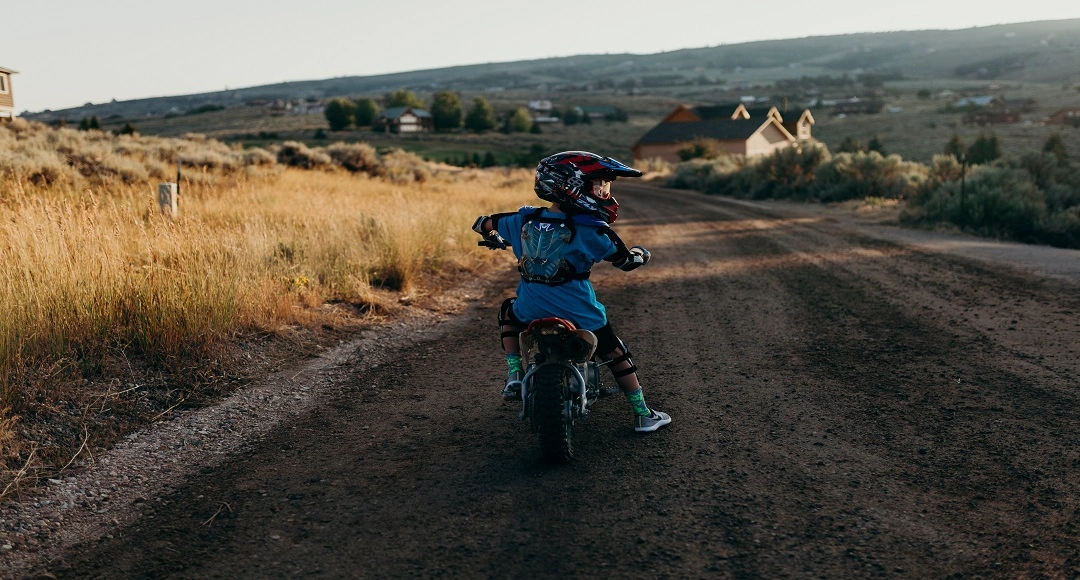
Electric Dirt Bike These two battery-powered mobility devices, both of which have the appearance of electric motorcycles, are suited for completely different application scenarios. Choosing the wrong one will cause problems, no matter whether the vehicle is used for daily commuting or off-road use.
It is perfectly normal that many people cannot distinguish between moped-style electric bicycles and electric off-road motorcycles; the two are entirely different in their applicable user groups, adaptable terrain, and compliant usage scenarios. This guide will break down 9 core differences between the two, to help you select the correct vehicle model within a purchase budget ranging from $599 to over $1,000.
What Is an Electric Dirt Bike?
To clarify the research boundary, the electric off-road motorcycle defined in this study is a vehicle controlled exclusively by a throttle, with no pedals, and purpose-built for outdoor unpaved surfaces. This model comes standard with an off-road-style frame, deep-tread anti-slip tires, and a suspension system capable of absorbing impacts from complex terrain. This study will carry
out testing and evaluation of children’s electric vehicles, selecting the VICTRIP X9 as a typical sample. Subsequent reports will sequentially present this model’s core hardware parameters, its intended user group of children aged 6–14, exclusive sales benefits, and its product positioning as a non-road recreational off-road vehicle.
What Is a Moped Style Ebike?
American-style low-step electric assist bicycles are fitted with both a throttle and functional pedals, and meet U.S. federal Class 1 and Class 2 standards. In the vast majority of U.S. states, riders do not need a driver’s license, vehicle registration, or insurance to operate these bicycles. Their standard configurations include a low-step frame, wide seat, and 4-inch fat tires, making them suitable for use on paved roads and light
gravel roads. A representative model, the VICTRIP R6 Pro, is equipped with a 1500W motor, has a top speed of 35 miles per hour, and is priced at $1099. It is designed for daily commuting and recreational riding, and is prohibited from entering off-road zones within OHV parks.
9 Key Differences at a Glance
| Feature | Electric Dirt Bike | Moped Style Ebike |
|---|---|---|
| Pedals | No | Yes |
| Terrain | Off-road only | Road + light off-road |
| Street legal (US) | Typically no | Often yes (Class 1/2) |
| Motor power | 500W–3,500W peak | 500W–1,800W nominal |
| Top speed | 15–30+ mph | 20–35 mph |
| Best for | Trails, backyards, OHV parks | Commuting, recreation |
| Frame style | Aggressive/motocross | Step-through or bench seat |
| Tire type | Knobby off-road | Fat tire (4″) |
| VICTRIP model | X9 — $599 | R6 Pro — $1,099 |
1. Design and Build: What Makes Each Look Different
To distinguish these two vehicle models with similar appearances, the most easily identifiable features are the seat and tires. This electric off-road motorcycle is derived from professional off-road motorcycles, and is fitted with a narrow, hard saddle, high ground clearance, and an upright, aggressive riding posture.
This light Moped Style Ebike has a lower body, and is equipped with a widened, padded long seat, wide tires similar to those of mini tractors, and a step-over frame. It prioritizes comfort over performance, and its appearance clearly indicates the scenarios it is suited for.
2. Pedals — A Bigger Deal Than You Think
A single core feature of electric off-road motorcycles carries significant legal implications: these vehicles have no pedals, without exception, and are operated solely via a throttle, which classifies them as motor vehicles rather than ordinary bicycles under U.S. law.
Light moped-style electric bicycles fitted with functional pedals can qualify for Class 1 and Class 2 e-bike certifications under federal guidelines. These certifications directly determine their legal riding areas, whether a driver’s license is required to operate them, and whether they are permitted to use urban bicycle lanes.All vehicles intended to be ridden on public roads must be equipped with pedals, and off-road motorcycles cannot meet this compliance requirement.
3. Terrain and Real-World Use Case
The vast majority of off-road motorcycle buyers fall into a common, core misconception regarding this category of off-highway vehicles (OHVs). These vehicles may only be operated on four types of legally permitted sites, including private backyards and off-road trails. Most states in the United States clearly stipulate that riding such vehicles on public roads is illegal, regardless of their engine displacement.
Unlike other electric bicycles introduced previously, the light moped-style electric vehicle mentioned in this paper is primarily used for commuting, riding within residential communities, and traveling along coastal waterfront trails. It is only suited for use on paved roads and light gravel roads. Its fat tires are designed solely to cushion urban road bumps, and it is absolutely not suitable for high-intensity off-road use.
4. Motor Power and Speed
At the very start of this paper, it is explicitly stated that a clear distinction must be drawn between two categories of electric vehicles that have overlapping power ranges but entirely different core uses: one is electric off-road motorcycles, and the other is moped-style electric bicycles. Both categories are marked with their
This study develops a multi-dimensional classification framework, sorting out two types of easily confused electric vehicles across three dimensions: power parameters, commercial product cases, and applicable use scenarios, to anchor clear boundaries between them. The latter of the two types has a top speed of 35 mph, can only travel on flat paved roads, and its speed exceeds that of most electric off-road motorcycles, which explicitly defines the classification boundary between the two categories.
Many cycling enthusiasts mistakenly believe that higher bicycle power is always better. In reality, increased power can only boost speed on terrains that match the original manufacturer’s intended design conditions.
5. Legal Classification in the United States
This is the most important difference — and the one most buyers discover too late.
Electric dirt bikes are generally treated as OHVs or unclassified motorized vehicles.The vast majority of U.S. states ban these light off-road vehicles from accessing public roads, bicycle lanes, and sidewalks, only permitting their use on private land or designated OHV areas. A number of states allow these vehicles to travel on specific trails after they are registered. At present, no unified national regulatory framework exists for these vehicles across the entire country.
Moped style ebikes with pedals can often qualify as Class 1 or Class 2 ebikes under federal law:
- Class 1: Pedal-assist only, max 20 mph — no license needed in most states
- Class 2: Throttle-assisted, max 20 mph — still no license in most states
- Class 3: Up to 28 mph — some states (like California) require riders to be 16+ and wear a helmet
The key unlock is the presence of functional pedals and staying within the speed threshold. A moped style ebike that meets Class 1 or Class 2 criteria can legally use bike lanes and public roads in the majority of US states — without a license, registration, or insurance.Always check your state’s specific ebike laws before riding on public roads, as rules vary.
6. Tire Type and What It Means for Your Ride
Currently, mainstream electric off-road e-mopeds and lightweight pedal-assisted e-bikes on the market, despite overlapping power ranges, have formed entirely distinct usage boundaries due to differences in their core tire designs: the block-pattern off-road tires of the former are designed specifically for loose, uneven terrain to prevent slipping. First, we establish a baseline for comparison using the 10-inch pneumatic off-road tires of the third-party reference model VICTRIP
X9. These tires are suitable for unpaved off-road sections, but deliver a relatively stiff ride feel on urban roads. The pedal-assisted model covered in this evaluation is fitted with 4-inch wide tires, which are only suitable for flat urban road surfaces and are completely unsuited for off-road scenarios. Ultimately, selecting tires comes down to choosing options that match the travel terrain one commonly uses.
7. Maintenance and Running Costs
Two types of electric vehicles do not require the maintenance tasks that are necessary for gasoline cars, including oil changes, spark plug replacements, and carburetor cleaning, and only incur the routine costs related to batteries, brakes, and tires.
However, off-road riding leads to faster wear and tear on the suspension, dedicated chains only compatible with off-road motorcycles, and tires of off-road motorcycles. For the same mileage traveled, light motorcycle-style electric bicycles used for road commuting generally exhibit much lower overall wear.
Both products in the entire VICTRIP product series are covered by a one-year official warranty, eliminating your concerns over first-year repair costs.
8. Who Each Bike Is Built For
Choose an electric dirt bike if:
- Your child (or you) wants to ride trails, backyards, or OHV parks
- Off-road performance and terrain handling matter more than versatility
- You have access to private land or a designated riding area
- You’re shopping for a kid aged 6–14 (e.g., VICTRIP X9 at $599)
Choose a moped style ebike if:
- You want to commute, run errands, or ride on public roads
- Street-legal status is important to you
- You need one vehicle that handles both roads and light trails
- You’re looking for a daily-use ebike for a teen or adult
9. Price and Value for Your Riding Style
Entry-level electric off-road bicycles for children are priced between 350 and 600 US dollars. The VICTRIP X9, which costs 599 US dollars, comes with robust, reliable specifications and offers excellent value for money.Quality-tier light moped-style electric assist bicycles are priced between 799 and 1499 US dollars. The VICTRIP R6 Pro, which retails for 1099 US dollars, is a mid-range model suitable for commuting, leisure use, and road riding.Both VICTRIP models ship free, qualify for Klarna and Afterpay installments, and come with a 14-day trial period— reducing the risk of buying online without a test ride.
The Bottom Line
These two models of electric two-wheelers are not interchangeable. One is a lightweight electric bicycle, which is suited for urban roads, requires no driver’s license, and balances core performance with riding comfort. The other is an electric off-road motorcycle, built for wilderness trails, restricted to use only on private land, and designed primarily for off-road use.
Read More: Growth Navigate Funding: Secure & Scale Your Business Capital