
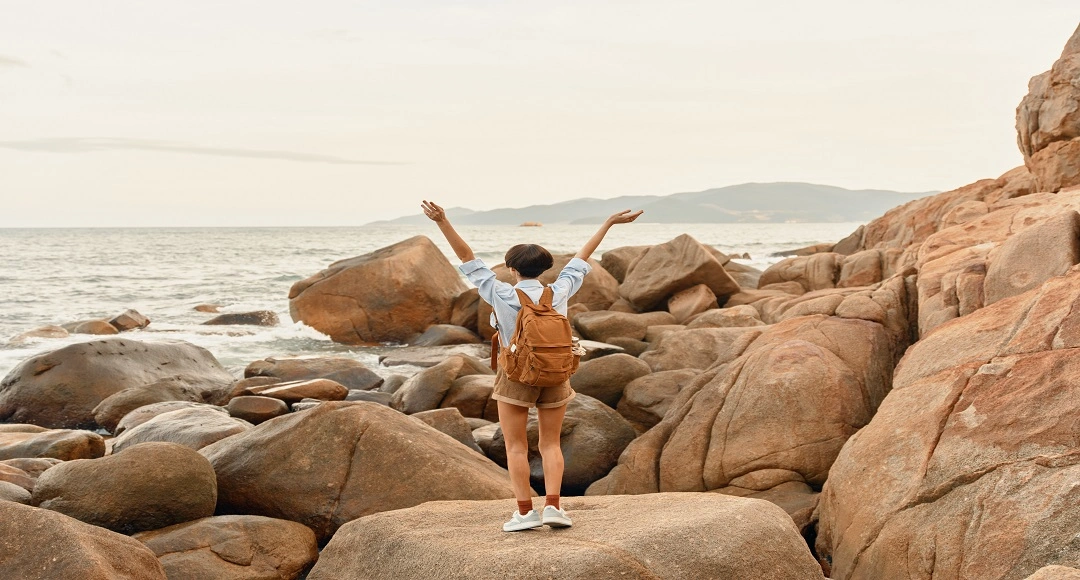
Travel used to be measured by how much we could fit into a few short days. More cities, more photos, more restaurants, more landmarks, more movement. But many people are beginning to realize that a packed vacation can feel strangely similar to the life they were trying to escape. The body changes location, but the mind stays rushed.
That is why slow travel feels so meaningful right now. It is not simply about staying somewhere longer. It is about traveling in a way that gives you space to breathe, notice, rest, and return to yourself. New forms of slow travel are making that easier, whether through river journeys, wellness retreats, farm stays, digital detox escapes, walking holidays, rail trips, or quiet stays in less crowded places. These are not just vacations. They are invitations to feel present again.
Slow Travel Gives Your Nervous System A Break
Many people do not realize how much tension they carry until their pace changes. Daily life trains the body to stay ready for the next demand: messages to answer, deadlines to meet, bills to handle, people to support, and choices to make. Then vacation arrives, and we often repeat the pattern by filling every hour.
Slow travel helps because it removes that pressure. A gentler trip does not ask you to make constant decisions. It gives you permission to leave space in the day. You might wander without a fixed plan, sit in a café longer than expected, return to the same bakery each morning, or read by a window instead of forcing another stop.
This is why slower formats, including countryside stays, rail journeys, walking routes, and European cruise ships, can feel restorative when they are planned around comfort rather than speed. The nervous system responds to rhythm, sleep, gentle movement, and fewer transitions. When those pieces are present, the body has a better chance to relax, and the mind can become quieter.
A calm morning in a new place can reveal more than a crowded itinerary. You may notice your tiredness, your needs, your hopes, or the changes that have been quietly asking for your attention.
Digital Detox Trips Make Silence Feel Possible Again
One of the clearest new forms of slow travel is the digital detox trip. This does not always mean handing your phone to someone at reception or disappearing into the mountains with no signal. Sometimes, it simply means choosing a trip where screens are not the center of the experience.
Nature retreats, walking holidays, remote cabins, meditation weekends, and small group wellness trips all help create a healthier distance from the constant noise of online life. The point is not to reject technology completely. It is to remember that your mind was never meant to be available to everyone all the time.
When you step away from the scroll, the first feeling may be discomfort. Silence can feel strange when you are used to filling every pause. But after a while, that discomfort often softens. You begin to notice sounds, textures, weather, hunger, tiredness, and emotion. You remember what it feels like to think without being interrupted.
This is one of the deepest gifts of slow travel. It does not only take you somewhere new. It removes enough noise for you to meet yourself there.
Farm Stays And Rural Escapes Bring You Back To Simple Rhythms
Farm stays, countryside retreats, and rural guesthouses are also becoming more attractive because they offer something modern life often takes away: simplicity. There is comfort in waking up to natural light, eating food grown nearby, walking through open space, and letting the day be shaped by weather instead of notifications.
These trips are especially powerful because they reconnect people with ordinary things that feel almost forgotten. A slow breakfast. A long walk. A conversation with someone who lives differently. The smell of soil after rain. The patience of animals, gardens, and small villages.
Rural travel can also soften the need to perform. In busy cities, travelers often feel pressure to dress well, move fast, spend more, and document everything. In a quieter place, the expectations change. You do not have to prove that you are having the best trip. You can simply have a real one.
That honesty is part of the healing. Slow travel brings you closer to the kind of life where enough is actually enough.
Rail Trips And Walking Holidays Make The Journey Part Of The Healing
Another growing form of slow travel is the return of scenic movement: trains, walking routes, cycling trips, and long-distance trails. These experiences remind us that travel does not have to begin only when we arrive. Sometimes, the journey is where the reconnection happens.
Train travel gives you time to watch landscapes shift gradually. Walking holidays bring the body into the present through movement, breath, and physical effort. Cycling trips create a balance between activity and attention. None of these travel styles is passive, but they are usually less frantic than jumping between crowded attractions.
They also restore a sense of proportion. When you move through a place slowly, you understand distance differently. A mountain is not just a background for a photo. A village is not just a stop. A river is not just scenery. Everything has texture, scale, and rhythm.
This can be grounding for people who spend most of their lives moving through screens, cars, elevators, and schedules. Slow physical travel reminds the body that it belongs to the world, not just to work and responsibility.
Reconnection Often Happens In Less Crowded Places
Slow travel also encourages people to look beyond the most obvious destinations. Instead of visiting only the famous capital, travelers may choose a smaller town nearby. Instead of going during the busiest season, they may travel in spring, autumn, or winter. Instead of chasing what is viral, they may ask what feels peaceful, meaningful, or personally right.
This shift matters. Crowded places can be wonderful, but they can also make travel feel like competition. You compete for space, restaurant tables, clear photos, and quiet moments. Less crowded destinations make it easier to soften. You can move at a human pace. You can speak to locals without feeling like part of a wave. You can experience culture without turning it into a race.
Off-season travel can also create a more honest relationship with a place. You see ordinary life, not only the polished version made for peak tourism. That can make the trip feel more intimate and less staged.
Wrapping Up
Slow travel is less about distance and more about attention. When you choose quieter routes, simpler rhythms, and experiences that leave room to breathe, travel becomes restorative instead of exhausting. It helps you notice your needs, reconnect with the present, and return home with a calmer, clearer sense of yourself.
Read More: Recyclatanteil: How to Calculate and Improve Recycled Content