Are you tired of doing the same squat and lunges for months to only find that your legs change very little if at all? Then it is time to know about split squats. This exercise, along with its better known relative the Bulgarian split squat and it is one of strength training (weight-based muscle training) sophisticated leg blasters. It targets your quads, glutes and hamstrings like no other exercise does, corrects muscle strength discrepancies between the left and right leg and, more often than not requires little equipment meaning it can be performed almost anywhere.
This guide will cover everything you need know; what exactly is a split squat, how it differs from a Bulgarian split squat and which muscles you are working, but mainly how to perform the exercise correctly so that you can build your legs without destroying your knees.
Table of Contents
- What Is a Split Squat?
- Split Squat vs. Bulgarian Split Squat
- What Muscles Does a Split Squat Work?
- Benefits of Split Squats
- How to Do a Split Squat (Step-by-Step)
- How to Do a Bulgarian Split Squat (Step-by-Step)
- Bulgarian Split Squat Form: Common Mistakes to Avoid
- Split Squat Variations to Try
- How to Program Split Squats Into Your Routine
- Safety Tips and Who Should Be Cautious
- Frequently Asked Questions
- Final Thoughts
What Is a Split Squat?
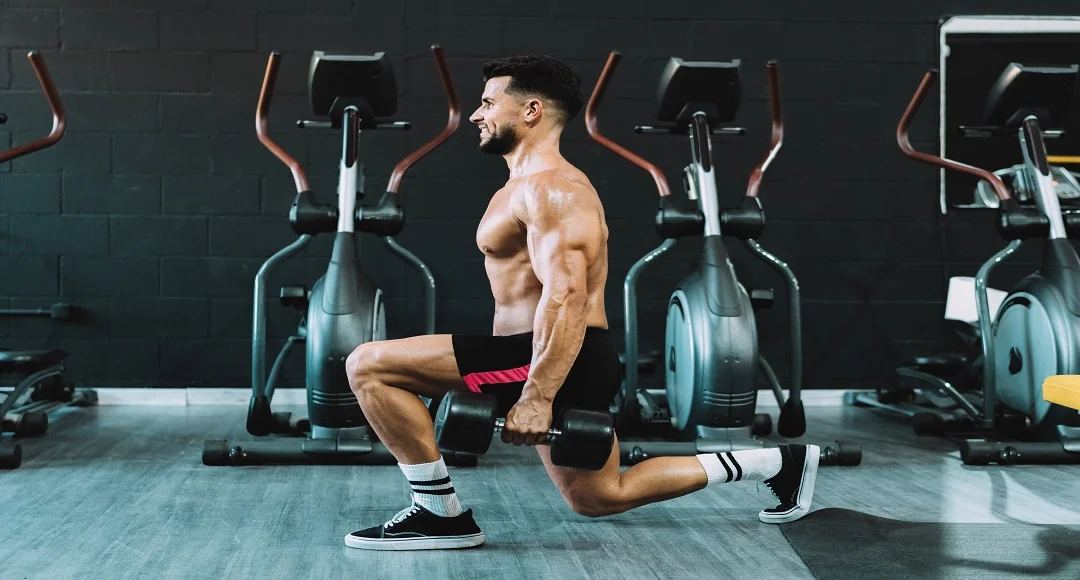
Split squat — This is a single-leg dominant lower-body exercise where you place one foot in front of the other and descend straight down until your knees are approximately 90 degrees bent. Your feed remain planted in the same place during the entire set, unlike a lunge. This is not you stepping forward and backwards each rep, this is you dropping down and driving back up.
That staying in place feature is what makes split squats such an effective move. Since you are not moving through space, all your attention can be given to control, depth and muscle tension rather than momentum. So it’s basically a static lunge, but the stability of that action makes this a great beginner and advanced lifters exercise.
You can attempt split squats with your own bodyweight or load them for added resistance using dumbbells, a barbell, or even resistance bands depending on your level of strength and goals.
Split Squat vs. Bulgarian Split Squat
This is more common point of confusion so Let clarify.
When they see you perform a split squat, although both of your feet are on the ground, your front foot is flat on the floor and your back foot either remains flat or with the heel slightly lifted.
This is where we can take that same staggered relationship and lift the back foot (on a bench, box, step behind you): enter the Bulgarian split squat. That elevation changes everything. It allows for a greater range of motion, further places the majority of the workload on the front leg and requires far more balance and mobility of both hips.
In short:
- Split squat: more stable (both feet on the ground); easier for beginners
- Bulgarian split squat: elevated back foot, more difficult balance challenge, longer range of motion, seems so much harder
If you are new to single-leg training, practice normal split squats for stability and strength before progressing to the Bulgarian version.
What Muscles Does a Split Squat Work?
Although both split squats and Bulgarian split squats target a very similar set of muscles, they do slightly favor different ones depending on where your torso is as you drop down step forward or back.
Primary movers:
- Quadriceps: Your quads perform most of the pushing work, especially with a relatively upright torso.
- Glutes: Your front leg glute fires with a lot of effort, especially when you lean your torso forward slightly while pushing through the heel.
- Hamstrings: Help the glutes extend the hips as you stand back up..
Secondary/stabilizer muscles:
- Adductors (inner thigh): helps keep the knee tracking properly and stabilizing the hip
- Calves: Particularly the calf (gastrocnemius) of the working leg, which is important for balance and push-off.
- Core: Your abs and obliques are firing the entire time to keep your torso upright and prevent rotation.
- Hip flexors: The hip flexor of the back leg is very much stretched particularly for bulgarian variation.
Split squats are ideal for correcting strength imbalances on the left and right side of your body something bilateral exercises like the barbell back squat can actually hide purely by virtue of one leg doing almost all the work at a time.
Benefits of Split Squats
And while the split squat: is a great way to build bigger, stronger legs (especially when performed progressively over time), it provides several unique benefits that make them worth suffering through.
Unilateral strength and balance: By training one leg at a time you are isolating both sides and forcing them to work independently thus making your body resolve any imbalances in strength from the left to right.
Increased range of motion: When done with a rear-foot elevating (especially the Bulgarian variation), this portion takes on an even deeper hip flexor stretch and longer range under load for the front leg’s quad and glute.
Lower back friendly: Since you are usually using much lighter loads than a back squat, and the axial loading on the spine is less, split squats or single leg squats tend to be safer exercises for lifters with some degree of back issues.
Improved hip mobility: The rear leg positioning opens up the hip flexors, especially helpful for those that sit most of their day.
Transfer to sports and life: While running, climbing stairs, kicking, or simply changing direction all involve putting weight on one leg at a time. Split squats strengthen you in the position your body is put into during these movements.
Scalable for any level: You can perform bodyweight split squats, or load them up with dumbbells or even a barbell as you adva
How to Do a Split Squat (Step-by-Step)
How to enact a standard split squat in good form however:
Step 1: Set your stance. Stand upright, and then take one foot back into a staggered position (about 2 to 3 feet apart depending on your height). Your front foot is flat on the floor, and your back foot — you can lift your heel or keep it down, it depends if you want to be stable.
Step 2: Brace your core. Make sure to pull your ribs down, tighten up your abs and keep the torso vertical or with a marginal forward lean.
Step 3: Lower under control. Lower straight down by bending at both knees together. Keeping your front knee safely over your front foot (no bowing-in) and lowering your back knee down just above the ground.
Step 4: Check your depth. At the bottom both knees should at least be near a 90-degree bend. Front shin must be fairly vertical rather than shooting forward over the toes.
Step 5: Drive back up. Drive through the mid-foot and heel of your front foot—not your toes—to return to the start position.
Step 6: Repeat and switch legs Either complete all on one side before switching, or switch legs each rep depending on your program.
How to Do a Bulgarian Split Squat (Step-by-Step)
Bulgarian split squat form is a bit tougher to nail because of the increased balance requirement. This is how you do it properly:
Step 1: Find your bench. Position yourself a couple of feet in front of a knee-high box (or bench or step).
Step 2: Loud your back foot in the air Stretch one foot behind you and set your foot on the bench (laces-down). Slightly hop your front foot forward so that your stance feels balanced not too crowd in, and not too stretched.
Step 3: Set your torso. Walk with a Lifted Chest. Lean slightly forward at the hip (not bent over like a rounded back), which will put more focus on your glutes; stay more upright to emphasize quads.
Step 4: Lower straight down. Lower your back knee towards the ground with keeping the front knee & hip both bent. Keep pushing your front knee in the direction of your toes.
Step 5: Go deep, but not painful. For the full Bulgarian split squat, your back knee should nearly touch the ground with your front thigh nearly parallel to the floor. Only go as deep as you can maintain control — if your knee caves in or heel lifts, stop.
Step 6: Press onto your front heel to drive back up. Drive through your front foot to get you back to the top, maintaining tension in your working leg at all times instead of locking out and resting.
Step 7: Finish your reps and change sides. As this is a single-leg movement, always perform equal reps for each leg.
For more resistance, hold a dumbbell in each hand at your sides or holding one dumbbell or kettlebell goblet-style at your chest.
Bulgarian Split Squat Form: Common Mistakes to Avoid
This is an exercise that even advanced lifters get wrong. Here are the most common form breakdowns and how to resolve them.
Mistake 1: Stance too short. If your front foot is too close to the bench, your front knee will travel way past your toes and take on excessive stress. Fix it by stepping your front foot further forward until your shin stays closer to vertical at the bottom.
Mistake 2: Stance too short. In case your lead foot is towards the bench, your front knee will travel way in front of your toes, resulting in excess stress. Solution: Step your front foot further forward so that your shin stays closer to vertical at the bottom.
Mistake 3: Knee caving inward. This is typically indicative of either weak glutes or bad hip control. Explicitly drive your front knee out relative to your toes for the entire rep.
Mistake 4: Wobble on the Bottom What you should not be doing is slamming your back knee into the floor and rising back to standing, which takes tension off of muscles in early roundtrip deceleration and adds stress at the joints that was never needed. Lower, lower with control then stop and drive up
Mistake 5: Not considering your position-You either lean too far forward or are upright The angle of your torso isn’t “wrong” either way, but should be intentional. Leaning forward loads more glutes; staying upright lowers them. Arbitrary, uncontrolled leaning generally indicates that you have lost your balance.
Mistake 6: Rushing the reps. This is a control-based exercise. Getting through it quickly causes more wobble than needed and lets your tense muscles go loose.
Mistake 7: Back Foot Too High An excessively tall bench can force you through an awkward range of motion that not only feels shallow, but also puts your hips in a compromised position. For those newer to the movement, a smaller step or lower box would be appropriate.
Split Squat Variations to Try
These variations can help keep the exercise challenging after you learn the basic and target a different purpose:
- Hold dumbbells at your sides for added load: Dumbbell Bulgarian split squat
- Goblet split squat: Hold one dumbbell or kettlebell at chest level great for beginners since it also counterbalances the load and helps keep your torso upright.
- Barbell split squat: Once you’re strong with balance and form, load heavier by racking a barbell on your upper back.
- Deficit split squat: raise your front foot on a plate in order to push the range of motion through the front leg.
- Split squat jump: An explosive, plyometric version for developing power (bodyweight only).
- Front-foot-raised split squat: Places even greater load onto the quads and glutes of the working leg.
How to Program Split Squats Into Your Routine
Split squats and Bulgarian split squats work well as either your primary leg exercise for the day or as an accessory movement after a compound lift like a squat or deadlift.
general strength and muscle growth:
3–4 sets of 8–12 reps per leg, resting 60–90 seconds between sets.
building stability and control (beginners):
2–3 sets of 10–15 bodyweight reps per leg, focusing entirely on form before adding load.
strength-focused training:
3–5 sets of 4–6 reps per leg with heavier dumbbells or a barbell, resting 2–3 minutes between sets.
Because this is a demanding unilateral exercise, it’s common to feel more soreness than expected the first few times you try it — especially in the glutes and hip flexors. Start lighter than you think you need to and build up gradually.
Safety Tips and Who Should Be Cautious
Split squats are generally joint-friendly, but a few precautions are worth keeping in mind:
- Warm up your hips first. A few minutes of hip flexor and glute mobility work before your set will make a noticeable difference in your depth and comfort.
- Use a stable surface for the Bulgarian variation. A bench that can slide or tip is a common cause of falls. Use a sturdy, fixed bench or box.
- Go easy if you have knee pain. If you feel sharp pain (not muscle fatigue) in the front knee, shorten your stance or reduce your range of motion.
- Balance issues? Hold onto a wall, rack, or sturdy chair with one hand while you build confidence in the movement before doing it unassisted.
- Pregnant or recovering from injury? Speak with a physical therapist or doctor before adding single-leg loaded movements to your program.
Frequently Asked Questions
Q: How to do a Bulgarian split squat?
A: Stand a foot or two in front of a bench and put the top of one foot on it behind you, then lower your body by bending your front knee and hip until your back knee is almost between the floor. Stand back up by pushing through your front heel. Your upper body should be straight or a little bit forward, and try to have your front knee going straight over your toes.
What do Bulgarian split squats work?
A: They mostly work your front leg’s quadriceps, glutes, and hamstrings; but forces the core, adductors, and calves to pick up the slack for stability. The hip flexor of the rear leg is often worked during both phases of the movement, getting a deep stretch in that position.
How to do a Bulgarian split squats (multiple reps/sets)?
A: Either do all your reps on one leg (usually 8–12) before switching sides, or alternate legs, depending on your program. Perform 3 to 4 sets per leg while resting for 60 to 90 seconds between each set, adding load when your form is consistent.
What does a Bulgarian split squat work?
A: Primarily front leg quads and glutes, with secondary emphasis on the hamstrings, adductors, calves and core. It’s great for strength, size and stability all at once as a single leg movement.
What is a split squat?
A: The split squat is a stationary, single-leg dominant exercise in which you perform the movement as though you’re descending straight down and back up from that circuit with your feet not moving from their initial positions. This builds quad, glute, and hamstring strength and size while improving balance and correcting side-to-side imbalances.
Final Thoughts
The split squat and the more advanced Bulgarian split squat deserve a staple spot in your leg day routine. It develops an actual single-leg strength, it reveals weaknesses that two-legged work tends to mask and you don’t need a lot of equipment for it to be useful.
If you are new to single-leg training, begin with the basic split squat, get your technique right, and only progress to the Bulgarian variation when your balance and hip mobility allow for it. Be controlled, (I am talking to myself) ensure the tracking of your knee is proper and depth does not need a rush. Perform this consistently, and you will develop stronger & more symmetry in your legs than nearly all bilateral movements can provide on their own.
Read More: Glute Bridge: Exercise Proper Form, Benefits & Mistakes