
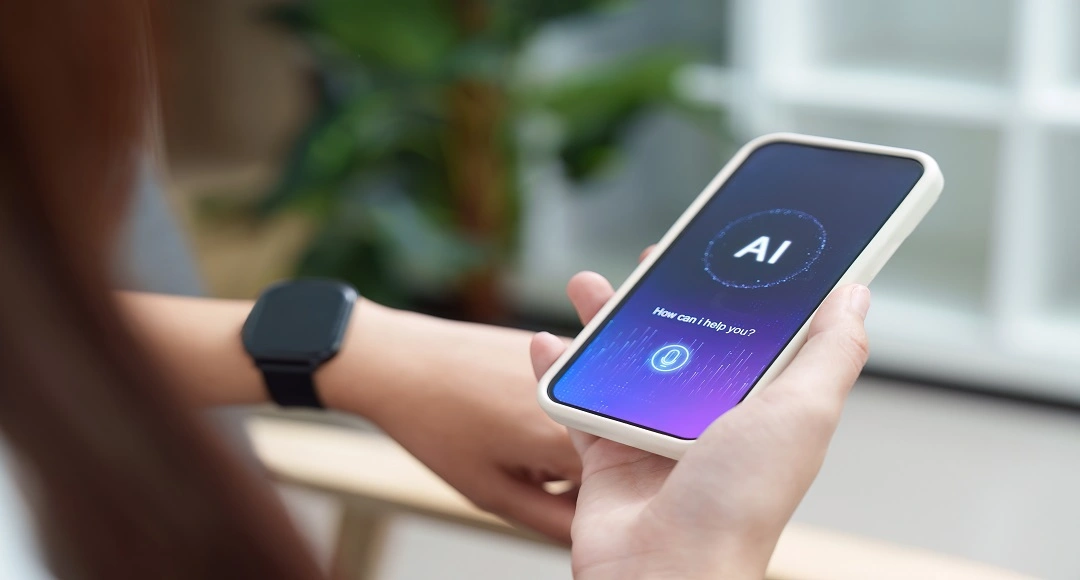
Anxiety has slowly become almost the defining mental-health problem of our era – one of the most widespread struggles in the world. And the gap between the number of people who suffer from it and the means we actually have to treat it has stayed enormous for decades. As humanity, we still don’t have an answer for how to narrow that gap. But now, watching this boom in artificial intelligence, it feels as if a new hope has appeared – that we might finally reach at least some of those millions through AI for anxiety.
Somewhere in an ad you’ve probably seen subheadings like “a science-based chatbot” or “a chatbot with clinical grounding.” But what exactly those words mean – far from everyone knows, and a lot of people take a marketing headline as genuine proof. So my task here is to explain what really points to clinical grounding, how to manage anxiety with AI in practice, and which AI therapy for anxiety you can actually trust.
Why More People Are Turning to AI for Anxiety Support
The scale is staggering. According to the World Health Organization, around 359 million people were living with an anxiety disorder in 2021 – and only about one in four, roughly 27.6%, ever received any treatment at all. Not cured, not given a full course; simply some help. That gap is exactly why interest in AI for anxiety has grown so fast: not because anxiety is untreatable, but because care is hard to reach.
In the United States the problem is deepening. Federal data from the Health Resources and Services Administration show that 40% of Americans – about 137 million people – live in a designated Mental Health Professional Shortage Area. Demand for mental-health services is projected to grow nearly 49% by 2033, while the workforce grows only about 11%. All of this lays, quite literally, a slow-ticking bomb under mental health: people now wait around 48 days for a specialist.
Cost makes it worse. A single therapy session runs $100 to $250, and one session is nowhere near enough – courses with real evidence need at least 8, sometimes 12 sessions. Far from everyone can afford that. For them, a chatbot for anxiety help isn’t a gimmick – it’s the only chatbot for anxiety help they can afford. AI is also there around the clock: a 2025 Harris Poll for the American Psychological Association found more than half of adults aged 18 to 54 are comfortable discussing their problems with AI, and you can write to it at two in the morning and know it will answer.
What “Clinically-Backed” Actually Means in AI Mental Health
“Clinically-backed” has become a marketing phrase, hiding a whole spectrum of grounding the average user never sees. From a clinician’s position, we expect a few things – and they aren’t equally strong.
The strongest sign is published, peer-reviewed evidence, ideally a randomized controlled trial, not a company’s own white paper – a real journal forces you through independent peer review first. The gold standard arrived in 2025, when Dartmouth published the first randomized trial of a generative AI therapy for anxiety chatbot, Therabot, in NEJM AI: generalized-anxiety symptoms fell by an average of 31%.
A weaker sign is the use of grounded methods – CBT, ACT, DBT – whose techniques are empirically proven. It’s a good signal, but weaker: we mostly have evidence for these exercises when a trained specialist runs them, and we can’t be sure AI applies them just as well. Weaker still is a clinical team behind the product, ideally tracking outcomes with instruments like the GAD-7 for anxiety or PHQ-9 for depression – because every time we see that line, we’re once again hearing marketing first, rather than knowing how it really is.
And one more sign is recognition from official bodies – the FDA in the US, the NHS in the UK. The problem is that no full procedure exists yet for generative tools: we can’t predict 100% what the AI will say. Its strength is precisely that it isn’t scripted – it adapts to the user – and that’s what makes it impossible to validate the old way. The FDA’s Breakthrough Device status isn’t full approval. So when we judge an AI for anxiety, we look at the whole sum of the evidence, not one line. (And general-purpose chatbots like ChatGPT, Gemini or Claude were never built for this and aren’t clinically validated.)
How AI Chatbots Help Manage Anxiety
So how do you manage anxiety with AI on an ordinary day? Understanding how to manage anxiety with AI starts with the mechanics, which are more concrete than people expect. The backbone is guided CBT exercises: a good chatbot for anxiety help walks you through naming the worry, weighing the evidence for and against it, and reframing the thought rather than amplifying it. The thing about AI is that it holds a stable, positive tone whatever you throw at it, runs the exercise at your pace, and carries you through – from the first moment of realizing what the problem is to the last moment when help has been delivered.
For acute moments, knowing how to manage anxiety with AI means leaning on grounding and breathing techniques – like 5-4-3-2-1 – delivered fast, right here and now, without hunting through unclear sites on Google. Apps like Elomia suggest these routines based on what they detect in the conversation. Over a longer horizon, mood tracking and journaling let AI find your triggers and surface patterns hidden from you; between sessions, it lets you capture a thought in your own voice and keep reflecting when your therapist isn’t there – though it’s worth asking your therapist how they feel about that first.
Let me put it this way: the best way to understand how to manage anxiety with AI is as between-sessions support, not a stand-in for a therapist.
Top Clinically-Backed AI Chatbots for Anxiety in 2026
Before naming names – what’s the best AI tool for calming anxiety? is really a question of fit, not popularity. This list is curated, not ranked. Each AI for anxiety tool was chosen for its clinical foundation and anxiety-specific features. (Two pioneers, Woebot and Therabot, shaped the evidence base but aren’t straightforward consumer picks today.)
Elomia – AI chatbot for anxiety help and daily emotional support. A chatbot for anxiety help built by clinicians and trained on CBT-style sessions; anonymous, around the clock, with grounding, breathing and self-esteem exercises. A controlled study found regular use significantly reduced anxiety, depression and negative affect; a 2025 BMC Psychology study reported improvements among students in distress (quasi-experimental), and a randomized trial is now registered on ClinicalTrials.gov. Its makers are clear it isn’t therapy.
Wysa – clinically-backed AI for CBT-based anxiety management. A well-validated example of AI therapy for anxiety; earned the FDA’s Breakthrough Device Designation, with research showing it builds a bond comparable to a human therapist’s.
Youper – AI therapy for anxiety with cognitive reframing exercises. Pairs CBT with emotion tracking; a Stanford-affiliated study of ~4,500 users saw anxiety drop 24% in two weeks (observational).
Earkick – AI tool for calming anxiety in the moment. If you’ve wondered what’s the best AI tool for calming anxiety the instant it hits, Earkick is built for the spike – seconds-long check-ins, breathing support, even heart-rate biofeedback.
Ash – AI chatbot for anxiety and stress reduction. Launched 2025 by Slingshot AI; this chatbot for anxiety help remembers prior conversations and surfaces weekly insights. No peer-reviewed RCT yet, and its free model trains on your conversations unless you opt out.
Limbic – AI mental wellness app with anxiety-specific modules. A clinically integrated AI for anxiety used inside the NHS; holds UK Class IIa medical-device certification.
Clare&me – AI for anxiety built around mindfulness and grounding techniques. Works over WhatsApp and phone calls; lighter evidence, but a real innovation in access.
Criteria for Choosing the Right AI Chatbot for Anxiety
Whenever you ask what’s the best AI tool for calming anxiety? run it through a few checks. Look for a named, evidence-based method and peer-reviewed outcomes, not homepage claims. Look for anxiety-specific features – grounding, breathing, GAD-7-style tracking – that make a chatbot for anxiety help genuinely useful. Weigh privacy: a 2024 Mozilla review found 19 of 32 mental-health apps failed to protect user data, and in 2023 the FTC fined BetterHelp $7.8 million for sharing it. Check for crisis protocols – in a 2025 Stanford study, some bots missed an oblique suicide cue entirely. And favor honest scope: the best AI therapy for anxiety says plainly it’s for mild-to-moderate needs, and a good chatbot for anxiety help never claims to replace care.
How to Use AI Chatbots Effectively for Anxiety
Getting value is less about which app you pick and more about how to manage anxiety with AI responsibly. Favor consistency over intensity – benefits tend to emerge around four weeks and deepen by eight, so a brief daily check-in beats a single marathon session. Treat any AI therapy for anxiety as a supplement, not a substitute; even Therabot’s creators say no generative agent is ready to work fully on its own. Know the limits: in 2025 Illinois became the first US state to ban AI from delivering therapy outright, and the APA urges people not to use these tools instead of a professional. And know when to reach for a human – if you’re in crisis or your symptoms are worsening, contact a professional or a crisis line (in the US, call or text 988). The chatbot is the waiting room, not the treatment room.
FAQ
What’s the best AI tool for calming anxiety? There’s no single winner – the answer to what’s the best AI tool for calming anxiety depends on your need: Elomia for clinician-designed daily support, Wysa for the deepest evidence, Youper for structured reframing, Earkick for in-the-moment grounding. The best AI tool for calming anxiety is the one that’s clinically grounded and that you’ll use consistently.
How do you manage anxiety with AI? You manage anxiety with AI through guided CBT, cognitive reframing, grounding and breathing in the moment, and ongoing mood tracking – used regularly, as a supplement to care. That, in short, is how to manage anxiety with AI.
Is AI therapy for anxiety actually effective? AI therapy for anxiety is effective modestly and meaningfully for mild-to-moderate symptoms: a 2026 meta-analysis of 39 trials found significant anxiety reductions, and Therabot reported a 31% drop. But effects are small-to-moderate and sometimes fade, and AI therapy for anxiety is weaker or unproven for severe cases.
Can an AI chatbot replace a therapist for anxiety? No. Any chatbot for anxiety help is an adjunct, not a substitute – it can fail in crises and lacks accountability.
Are AI tools for anxiety clinically-backed? Some are, to varying degrees. A few examples of AI for anxiety have peer-reviewed trials or regulatory recognition; many popular tools aren’t validated at all. “Clinically-backed” is a spectrum – which is exactly why you check the evidence first.
Read More: Bumpdots.com: Content Strategy, Niches & Requirements