
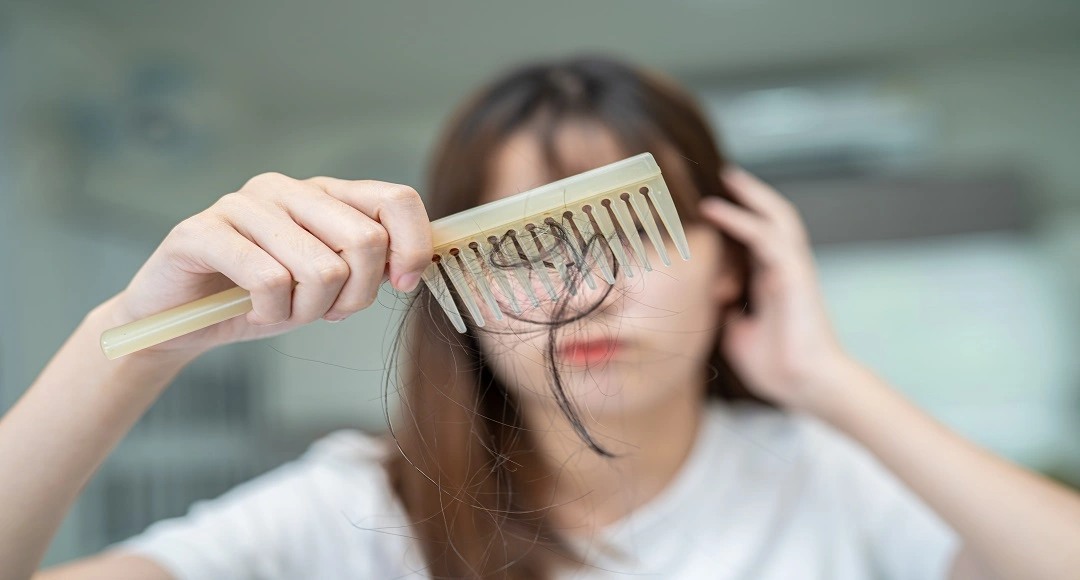
You had a rough few months, maybe a major life change, a loss, a stretch of bad sleep and worse deadlines, and now there’s noticeably more hair in the drain than there used to be. If you’re wondering whether that’s connected, it almost certainly is. For anyone trying to build a calmer, more intentional relationship with stress, watching it show up physically like this can be its own source of anxiety. The good news is that stress-related hair loss is one of the more well understood and, often, more reversible forms of thinning.
So Can Stress Actually Cause Hair Loss?
Yes, and researchers have gotten fairly specific about how. When the body experiences a significant physical or emotional stressor, it releases cortisol, the primary stress hormone. Elevated cortisol can push a larger-than-normal number of hair follicles out of their active growth phase and into a resting phase prematurely. A few months later, all those follicles shed around the same time, which is why the hair loss often feels delayed and disconnected from whatever caused it. This condition has a clinical name: telogen effluvium.
What Does Stress-Induced Hair Loss Actually Look Like?
Unlike pattern baldness, which tends to concentrate at the temples or crown, stress-related shedding is usually diffuse, meaning it happens more evenly across the whole scalp. You might notice more hair on your pillow, in the shower drain, or caught in a brush, rather than a receding hairline or a bald spot. It typically starts two to three months after the stressful event, which is exactly why people are often confused about the cause. Researchers have also found that chronic stress affects melanocyte stem cells, which is part of why prolonged stress is linked to premature graying as well as shedding.
Can High Cortisol Cause Hair Loss on Its Own?
Yes, and it doesn’t require a single dramatic event. Chronic, lower-grade stress that keeps cortisol elevated over long periods can have a similar effect to an acute stressor, just slower and less obvious. This is part of why stress-related hair loss can sneak up on people who don’t feel like anything “happened,” when really it’s been building for months.
Can Hair Grow Back After Stress-Related Loss?
In most cases, yes. Telogen effluvium is generally temporary, and hair often begins regrowing within three to six months once the underlying stressor is addressed or resolves. That said, “addressed” is doing a lot of work in that sentence. If the stress is ongoing and unmanaged, the shedding can continue or recur.
How Do You Stop Stress-Related Hair Loss?
A few things genuinely help, based on the current research:
- Address the stress itself, not just the hair, since the follicles are responding to a hormonal signal, not a topical problem
- Build in consistent recovery practices, whether that’s breathwork, movement, sleep hygiene, or whatever actually lowers your baseline cortisol
- Support your body’s underlying resilience nutritionally, since chronic stress also depletes the nutrients your follicles need to function well
- Give it time. Hair cycles move in months, not weeks, so patience is part of the process, not a failure of it
Here’s the thing worth sitting with: hair loss from stress is often your body telling you something you already sort of knew. It’s a visible signal for an invisible problem.
Thinking About Hair Health as Part of the Bigger Picture
This is part of why hair health is increasingly being treated as a whole-body issue rather than an isolated cosmetic one. Supplement brands built around men’s longevity, like FOLIKL+ , approach hair aging through hormonal balance, oxidative stress, and cellular energy together, rather than targeting one symptom in isolation. If you’re curious how the biology actually connects, the case for proactive hair longevity lays out how stress, hormones, and nutrition interact over time.
The Bottom Line
Stress-related hair loss is real, it’s biologically explainable, and for most people, it’s temporary. The shedding you’re seeing now is likely tied to something that happened a couple of months ago, not something happening today. Addressing the underlying stress, staying patient, and supporting your body’s recovery gives your hair the best shot at bouncing back.
Can Stress Cause Hair Loss? Yes, Here’s the Science
Stress-related hair loss is real and has a name: telogen effluvium. Here’s how it happens, what it looks like, and how to help your hair recover.
FAQs
How do I stop stress-related hair loss?
Address the underlying stress rather than just the hair itself, build consistent recovery habits to lower baseline cortisol, support your body nutritionally, and allow several months for the hair cycle to respond.
What does stress-induced hair loss look like?
It typically presents as diffuse shedding across the whole scalp, rather than a receding hairline or bald spot, and usually begins two to three months after the triggering stressor.
Can hair grow back after losing it from stress?
Yes, in most cases. This type of hair loss, called telogen effluvium, is generally temporary and hair often begins regrowing within three to six months once the underlying stress is addressed.
Can high cortisol cause hair loss?
Yes. Elevated cortisol, whether from an acute stressful event or chronic lower-grade stress, can push hair follicles prematurely into a resting phase, leading to increased shedding a few months later.
Read More: Incfidelibus: The Truth Behind the Latin Term and “Hacker” Spam