
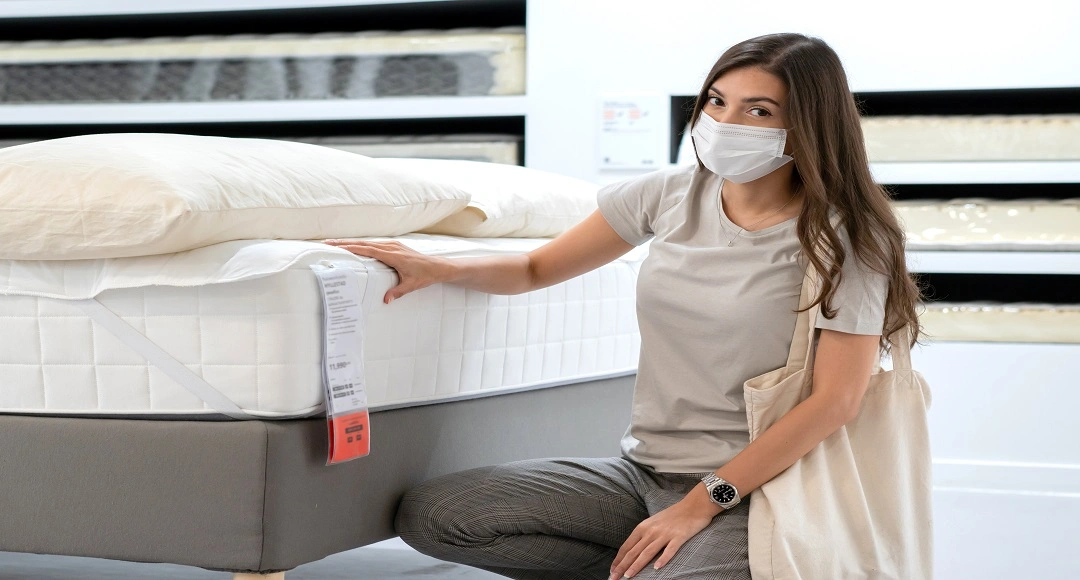
A mattress purchase is one of the very few that has an immediate effect on your daily life, but it is also one of the least informed purchases anyone ever makes. People live almost a third of their lives on one, hold onto it for most of a decade and typically choose based on a few online reviews and what looks like an acceptable price.
Every morning the difference between a mattress made for you and one that is not appears. Some effort is justified in getting it right.
Testing Before You Commit
It seems odd to buy a bed that you have never slept on; yet this has become the way everyone buys. Specifications and reviews only get a shopper so far, as firmness ratings are subjective and no written description conveys how something actually feels to your own body weight.
A showroom removes that guesswork entirely, letting you spend real time on a mattress before any money changes hands. Anyone unsure about a bed they have only seen online should visit a SleePare showroom and test it in person with guidance from a Sleep Expert. Online pricing is honored in store, so trying it first costs nothing extra.
Understanding the Main Constructions
Mattresses are just typically broken down into a handful of broad types, which all have genuine pros and cons.
A memory foam mattress conforms closely to the body and when it comes to pressure relief and motion isolation (important if you share a bed with a restive spouse) as well. Common complaints include heat retention and the feeling of sinking in, which some sleepers hate.
Innerspring mattresses rely on steel coils for support. They feel more responsive and sleep cooler (as compared to traditional foam), but they offer less pressure relief at the shoulders and hips, and transmit more movement across the surface.
Hybrids combine coils for support with more comfort layers of foam or latex on top, trying to have the best of both worlds — the support and airflow of coils, with the cushioning of foam. They are bulkier, and typically more expensive.
Latex, on the other hand, is responsive, durable as well as naturally cooler than memory foam. You pay a premium price, and it is substantial.
Firmness and How You Sleep
They are not a measure of quality. It is a fit question and the primary variable is sleeping position.
But for the shoulder and hip to sink lower into the mattress, while providing enough support so that your spine is still level? If it’s too firm, pressure builds up uncomfortably in those joints. Softer to medium usually suits.
Back sleepers require support under the lumbar area without hips sinking. Generally medium to medium firm is what works.
Because stomach sleepers need a firmer surface because anything with too soft a surface lets the hips simply sink and forces them into extension of the lower back. This is THE position that causes the most likely cause of back pain in the morning on a bad mattress.
All this is shifted by weight on body. This makes sense as heavier sleepers compress the comfort layers deeper which, in general means they require a firmer construction. A bed labeled medium may feel very firm to light sleepers.
Sharing a Bed
Almost always, two people do not want the same things and compromises are best discussed before ordering.
However, motion transfer is less relevant in a couple where one partner sleeps soundly. Traditional innersprings have a long-motion transfer; foam and hybrid constructions isolate movement much better.
Temperature differences are normal and can be solved by materials. Coil-built designs and latex sleep cooler, and cooling wraps assist at the margins.
But when you want different firmness, many brands provide a split setup that gives one experience on one side and the other feel on the other. Otherwise, a medium composition with topper only on one side has long been the middle road.
Size Decisions
Most people who upgrade in size say they should have done it sooner. A queen suits most couples and fits most bedrooms. A king provides more room per person meaningfully and is worth it if the space allows.
Measure the room before deciding, allowing walking space on the sides and clearance for doors and drawers. Also measure hallways, stairwells, and doorframes if the mattress arrives assembled rather than compressed.
Remember that a larger bed also means larger sheets, blankets, and a frame sized to match, all of which add to the total cost. Height matters too, since a thicker mattress on a tall frame can leave shorter sleepers climbing into bed rather than sitting down on it.
Trial Periods and Returns
It takes time for your body to acclimate to a new sleep surface — usually two to four weeks. Basing your opinion of a mattress off the first few nights is highly unreliable.
This makes trial periods TRUE, rather than just a marketing flourish. Do not rush through the agreement or terms before purchase. Certain ones have a min break-in time when returns are only accepted. Some offer refunds from return shipping or restocking fees. Some (like Zappos) will only exchange rather than refund.
Warranties cover manufacturing defects, not normal use softening. Most define a depth of permanent indentation that constitutes a defect, and most also stipulate that it must have an appropriate substrate beneath it to be in force.
Foundations and Support
The base beneath a mattress affects both feel and lifespan. Foam beds generally need a solid or closely slatted platform, and slats spaced too widely allow sagging that voids warranty coverage.
Old box springs designed for innerspring mattresses often do not suit modern foam constructions. Check what the manufacturer specifies rather than assuming existing furniture will work.
When to Replace
Most mattresses last between seven and ten years, though construction quality and body weight both affect that considerably.
The signals are usually clear once you look for them. Visible sagging or body impressions that do not recover. Waking with stiffness or pain that fades after you get moving. Sleeping noticeably better in hotel beds. Increasing restlessness through the night.
Budget Considerations
That said, price and quality are only loosely correlated at best, and the solution is almost never the most expensive option available for a given sleeper. More important is pairing construction and firmness to how you actually sleep.
Buy on the basis of cost over time, not purchase price. A low-quality mattress vs a high quality one is only a very small per night difference, over eight years of nightly use it pays back every morning.
Read More: SFM Compile: Tutorial The Easiest Way to Convert Models