
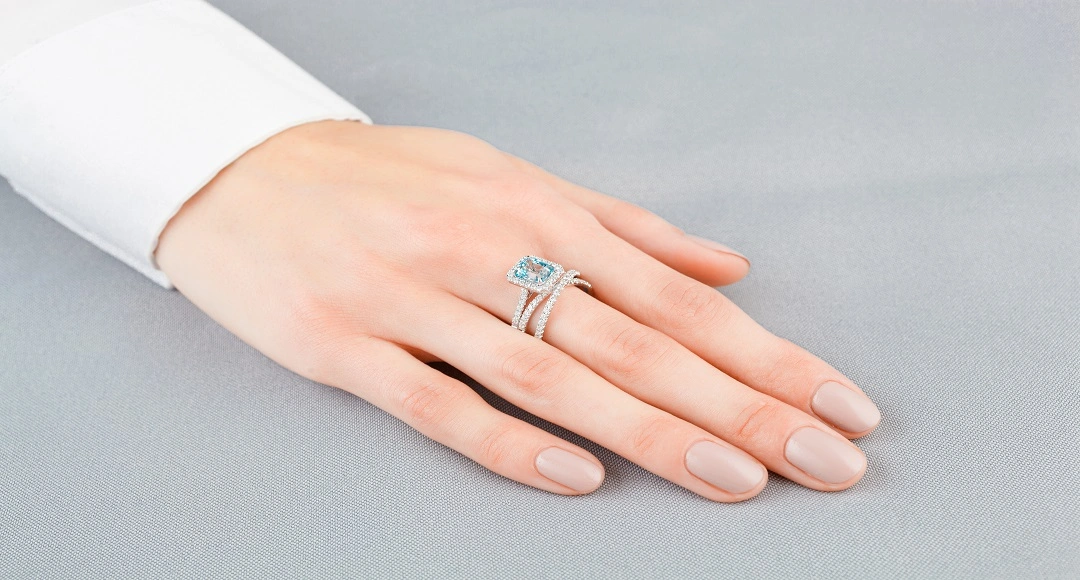
With a royal history to back it, the Marquise Diamond is perhaps one of the best options for a ring that celebrates everlasting love. The ring on the finger of a bride-to-be is a representation of years of love and passion. This is why the choice of ring should be made after careful consideration.
What makes the Marquise Diamond special
Legend has it that the marquise diamond cut was commissioned by King Louis XV of France, who had it designed to resemble the lips of his mistress, the Marquise de Pompadour. This is what gives it the elongated shape with tapered ends. Its shape makes the Marquise Diamond ring look bigger than a round diamond despite having the same carat weight. The narrow shape is also more flattering on the finger.
Why does the setting of a ring matter
The setting of a ring refers to the metal framework that holds it together, as well as the layout and arrangement of the gems that influence its durability and sparkle. It is of the utmost importance to consider the engagement ring’s setting before buying because it plays a huge role in the visual appeal, strength, and comfort. Always go for one that suits the wearer’s preference and lifestyle.
Choosing a setting to make the ring look bigger
A ring that looks bigger works as a bold statement piece that also screams that you have taken a new step in life. The Marquise Diamond is perfect for those who want to achieve this because its shape creates an illusion of a bigger gem. Additionally, the setting of the ring also plays an important role. Here are some settings that can make the diamond ring look bigger and more sparkly.
- Solitaire: This is a classic setting where the single gem becomes the centre of attention. When placed vertically on a thin band, it maximises the elongated effect, making engagement rings look more prominent.
- Halo: In this setting, the stone at the centre is surrounded by smaller diamonds. This gives the appearance of a larger surface area while also making it look more sparkly because of greater light reflection.
- The East-West: Here, the Marquise is placed horizontally. This setting makes it look broader and makes it seem like a larger portion of the finger is covered.
- Pave: This setting involves small diamonds being placed along the band, which makes the Marquise look even more brilliant. When a pave and a halo are combined, the centre will look significantly bigger and more exquisite.
- Three-stone: Here, the Marquise is flanked by two smaller stones on either side, which makes the overall ring look wider.
While choosing a setting that makes the ring look bigger, make sure that it also contributes to its durability while appealing to the wearer’s personal aesthetic.
Making the right choice of setting
Making the right decisions involves careful consideration of many details. Always remember that engagement rings are meant to last forever, just like the love they represent. An ideal framework would involve a six-prong configuration to improve the security of the diamond. The two V-prongs will protect the ends from chipping, and the other four will keep the diamond safely in place. The right setting will be one that ensures endurance and radiance.
How to care for your engagement ring
It is advised to only use warm water and mild soap to clean the ring. Avoid any kind of harsh chemicals as they can cause damage and make the stone lose its shine over time. Take off the ring when doing heavy chores with your hands and before sleeping because frequent tension can loosen the prongs. When it is not in use, make sure to store it in a safe box. Getting it checked at the store once in a while will prevent any damage from going unnoticed.
Conclusion
An engagement ring is a strong reminder of the best and worst moments of life that ultimately brought two people together. Therefore, it is crucial that it reflects the couple’s passion and personality. A timeless Marquise ring is the best way to celebrate this. Knowing how to choose a diamond ring setting and caring for it will guarantee a ring that lasts till the end and beyond.
Read More: Good Questions to Ask at Interview as Interviewee (Actually Works)