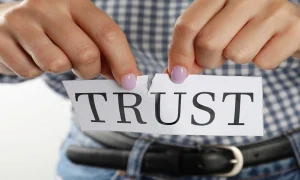

Signs of a Healthy Relationship You know that feeling when you’re with someone and you just don’t have to brace for it? Whatever “it” is. No guessing their mood before you walk in the door. You’re not rereading a text four times before hitting send because you’re not sure how it’ll land. There’s no stomach-drop when the phone rings and you can’t tell if it’s good news or bad.
That’s not luck, by the way. That’s what a healthy relationship actually feels like from the inside and most of what people write about this online misses it completely. Half the internet churns out red-flag content meant to scare you (“7 signs he’s secretly a narcissist”), and the other half is so vague it’s basically a fortune cookie. Communicate more. Trust each other. Great, thanks, very actionable.
So here’s an attempt to actually do this properly. What follows isn’t just romantic-relationship advice it covers parent-child bonds and friendships too, because weirdly, a lot of the same patterns show up in all three. Stick around and you’ll come away with something like a checklist. Not to score your partner, or your mom, or your best friend. Just to check where you actually stand.
Table of Contents
- What “Healthy” Actually Means
- 10 Signs of a Healthy Relationship
- Signs of a Healthy Relationship Checklist
- Signs of a Healthy Parent-Child Relationship
- Healthy Peer Relationships
- Myths That Trip People Up
- Keeping a Good Thing Good
- FAQ
- Last Thing
What “Healthy” Actually Means
Quick correction before anything else: a healthy relationship is not one where nothing ever goes wrong. If that’s the bar, you’ll talk yourself out of a genuinely good relationship the first time you have a real argument. And you will have a real argument eventually. Everyone does.
What separates healthy from unhealthy is what happens after the bad moment, not whether the bad moment happens at all. Does the fight actually resolve, or does it just get buried somewhere and left to rot? Around this person, do you feel more like yourself or smaller, somehow, like you’re taking up less space than you used to? And when there’s a disagreement, whose needs usually win? Is it always the same person, every time?
John Gottman built an entire career watching couples argue. Decades of it. He got scarily good at predicting who’d split up just from how they fought not whether they fought, but how. And what kept surfacing, over and over, was the same short list: respect, emotional safety, honesty, the sense that you’re on the same team even mid-disagreement. None of that is unique to romance either. You’ll see the same stuff echo through the parent-child and friendship sections further down.
So maybe the real question isn’t “is this perfect.” It’s simpler: does this person make you more capable of handling your actual life, or less?
10 Signs of a Healthy Relationship
One caveat before diving in you’re not going to hit all ten of these every single day. Nobody does. It’s the pattern over months that matters, not any one bad Tuesday.
One & Five Signs
- Disagreements don’t become crises. You can say “hey, that actually bothered me” without it spiraling into three days of cold silence or a shouting match. The relationship can take a hit without cracking.
- You don’t have to rehearse honesty. If you find yourself mentally drafting a sentence three different ways before saying it out loud worth noticing. In a healthy relationship you mostly just say the thing.
- Effort flows both ways, even if it’s lopsided some weeks. One person carries more some months. Fine, normal. What’s not fine: the same person always footing the bill.
- You still have an outside life. Your own friends. Your own weird hobbies nobody else cares about. Opinions that aren’t just a copy of theirs. Closeness doesn’t mean disappearing into somebody.
- Trust is the baseline, not something re-earned weekly. Nobody’s scrolling through anyone’s phone. Nobody’s demanding a minute-by-minute account of the afternoon.
Six & Ten Signs
- Real apologies happen not the “sorry you feel that way” version. And when they do happen, you accept them. Nobody files them away for ammunition later.
- Growth doesn’t threaten them. New job, new hobby, therapy, becoming a slightly different person than you were five years ago none of it should feel dangerous to the other side of the relationship.
- Boundaries count as information, not insult. “I need space tonight” is just a fact you’re sharing. It shouldn’t require an apology or trigger a fight.
- You feel more like yourself afterward, not less. Honestly one of the simplest tests around. After time together drained, or grounded? Be honest.
- After a rupture, there’s repair. Every relationship has disconnected moments. The healthy ones circle back. The unhealthy ones just let distance quietly accumulate until there’s nothing left worth repairing.
Signs of a Healthy Relationship Checklist
Lists are abstract. Try this instead go through it honestly, nobody’s grading you.
Communication
- I can raise something that’s bothering me without dreading it for hours first
- We actually listen instead of just waiting for our turn to talk
- Disagreements land somewhere resolution, at least understanding not just silence
Respect
- My choices get taken seriously even when they’re not what the other person would’ve picked
- Boundaries get honored, not guilt-tripped into oblivion
- Neither of us talks to the other in a way we wouldn’t in front of friends
Trust
- I don’t feel the pull to check up on them
- assume good intentions by default, even mid-argument
- I feel secure here. Not anxious.
Independence
- I’ve got my own people, my own interests, separate from this
- I’m genuinely encouraged to chase what matters to me
- Neither of us is the other’s whole identity
How You Actually Feel
- Calmer after time together, not more wound up
- Allowed to have an off day without it costing me the relationship
- I still laugh with this person. Regularly.
Growth
- My wins get celebrated, even the ones that have nothing to do with them
- We’ve grown together over the years, not apart
- Mistakes lead to accountability, not a shame spiral
Mostly checked off? Good sign. A lot left blank? Not a death sentence, but worth an honest talk or a session with a therapist if you’re not sure how to start that talk.
Signs of a Healthy Parent-Child Relationship
This doesn’t stop at romance. Some of the most formative relationships people carry for life are with their parents, and honestly? They set the template for everything that comes after.
Emotional attunement. A parent doesn’t need every answer. They just need to notice when their kid’s struggling and respond with curiosity instead of a lecture.
Autonomy that actually grows with age. A sixteen-year-old isn’t managed like a six-year-old. Parents hand over independence gradually matched to what the kid can actually handle, not something they fight over at every single turn.
Love that isn’t a performance review. A bad grade, a missed curfew, a decision the parent wouldn’t have made none of it should put the relationship itself on the line. Discipline, sure, that’s normal. Withdrawing affection as punishment is a different thing entirely.
Room to talk about hard things. Kids in healthy families actually tell their parents when something’s wrong, because on some level they trust the relationship can hold it.
Respect running in both directions. The power’s not equal, and it shouldn’t be a parent is still a parent but one who genuinely listens before making the final call teaches respect by demonstrating it, not lecturing about it.
Repair, again. Parents lose their temper sometimes. Kids slam doors. What actually matters is whether someone comes back afterward and says “I shouldn’t have yelled like that.” One habit like that teaches more than a household that never admits fault, ever.
A lot of what people drag into their adult relationships how easily they trust, how they argue, whether they can even say what they need out loud traces straight back here.
Healthy Peer Relationships
Friendships run on a similar blueprint, with a handful of things that stand out.
Reciprocity. Both people initiate plans. Both people show up when it counts. It’s not one person quietly carrying the entire friendship.
Room for other friendships. Healthy peer groups don’t define themselves by who gets left out. Jealousy over someone’s other friends is a warning sign, not a compliment, no matter how you frame it.
Feedback that doesn’t feel like an ambush. A real friend can say something you don’t want to hear, and somehow — you just know it’s coming from care, not a dig.
Someone else’s win isn’t your loss. Genuine happiness for a friend’s success, no competitive undertone hiding underneath it.
Differences don’t threaten anything. You don’t have to agree on everything. You just have to respect that the other person gets to be their own actual person.
This matters even more for kids and teens, where peer relationships shape self-esteem in ways that stick around for decades. The reciprocal, non-competitive kind of friendship is genuinely protective for mental health during those years — it’s not a small thing.
Myths That Trip People Up
Healthy relationships don’t fight. Wrong. Conflict is often how people actually communicate needs in the first place. What matters is how people handle it, not whether it happens.
If it were right, it wouldn’t take effort. Even great relationships take work, especially through transitions — a move, a new baby, losing a job, grief. Effort isn’t the red flag. One-sided, permanent effort is.
Jealousy proves they love me. Occasional jealousy is just human. Jealousy that turns into monitoring and control isn’t love wearing a different outfit it’s fear.
“Healthy means never being upset with each other.” Being annoyed sometimes doesn’t erase months of good history. What matters is whether someone says that annoyance out loud, or lets it sit and fester.
Keeping a Good Thing Good
Even a relationship that checks most boxes above needs actual upkeep. A few things that genuinely help:
- Real time together, phones away twenty undistracted minutes beats one big occasional gesture, most of the time.
- Ask better questions than “how was your day.” Try “what was the hardest part of today.” Specific questions get you specific, real answers.
- Say the appreciation out loud instead of just feeling it privately and assuming it’s obvious.
- Handle small irritations before they calcify into resentment nobody wants to name.
- Revisit needs and boundaries occasionally people change, and what worked two years ago might not fit anymore.
FAQ
Q: What is a sign of a healthy relationship?
A: Probably the clearest single one: both people can be honest with each other — disagreements, mistakes, all of it without worrying anyone will punish that honesty down the line.
Q: What are the signs of a healthy relationship?
A: Mutual respect. Honest communication. Trust. Reasonable conflict resolution. Independence. Emotional safety. Support for each other’s growth. Boundaries that get respected. The ability to repair after a rupture. Nobody nails every single one every day it’s the overall pattern that actually counts.
Q: What are signs of a healthy relationship, day to day?
A: Mostly small stuff. Checking in without being asked. Following through on what you said you’d do. Listening without immediately going on defense. Basic courtesy, applied consistently — the kind you’d give a good friend without even thinking about it.
Q: Which of the following exhibits signs of a healthy relationship?
A: This phrasing usually shows up in quizzes comparing a few scenarios side by side. Whichever one involves mutual respect, honest communication, room for both people’s needs, and calm conflict handling — that’s the healthy one. Not the one built on control, dismissiveness, one-sided effort, or fear of speaking up.
Q: Which characteristic is a sign of healthy peer relationships?
A: Reciprocity, probably above everything else. Both people investing. Both people showing up. Neither one carrying the friendship solo while the other coasts.
Last Thing
Healthy relationships romantic, family, friendship, whatever kind aren’t built on grand gestures or some fantasy where nothing ever goes sideways. Small, repeated moments of respect and honesty, stacked up over years, build them instead. If you read through this and recognized your own relationship in most of it good. That’s worth actually appreciating, not just taking for granted. If you noticed gaps instead, that’s not a verdict. It’s just information. Maybe something to bring up, a boundary to finally set, or a reason to loop in a counselor if you’re stuck on how.
No relationship is flawless, no matter how solid it looks from the outside. That was never really the goal anyway. The goal is a connection where you get to show up as your actual, unfiltered self and still be met with respect. That’s what “built to last” is actually about — not the absence of hard days, just what happens after them.
Read More: 5 Questions You Must Ask Your Partner Before You Get Engaged