
Walls are often treated as a background. Choose a color, choose a wallpaper, add some texture, and move on to the furniture.
In practice, wall finishes have a much greater effect on an interior than many homeowners expect. Light changes them. The condition of the wall changes them. The size of the room changes them. And two materials that look similar in a showroom can feel completely different once they are installed in a real home.
At Enjoy The Wall, our team works with both wallpaper and decorative plaster, led by Kris A., our Lead Installer & Design Consultant. That experience has taught us not to approach every project with the assumption that one finish is better than the other.
The important part is understanding the difference before choosing.
Wall Preparation Matters But Not Every Finish Needs the Same Surface
Every professional wall finish starts with preparation. That applies to wallpaper, lime wash, concrete finishes, Venetian plaster, and almost everything in between.
But the required level of preparation can be very different.
Peel-and-stick wallpaper is a good example. Because the material has a pre-applied adhesive and often has very little ability to stretch or compensate for imperfections, the wall generally needs to be extremely smooth, properly primed, clean, and stable. Small imperfections underneath can become surprisingly visible after installation.
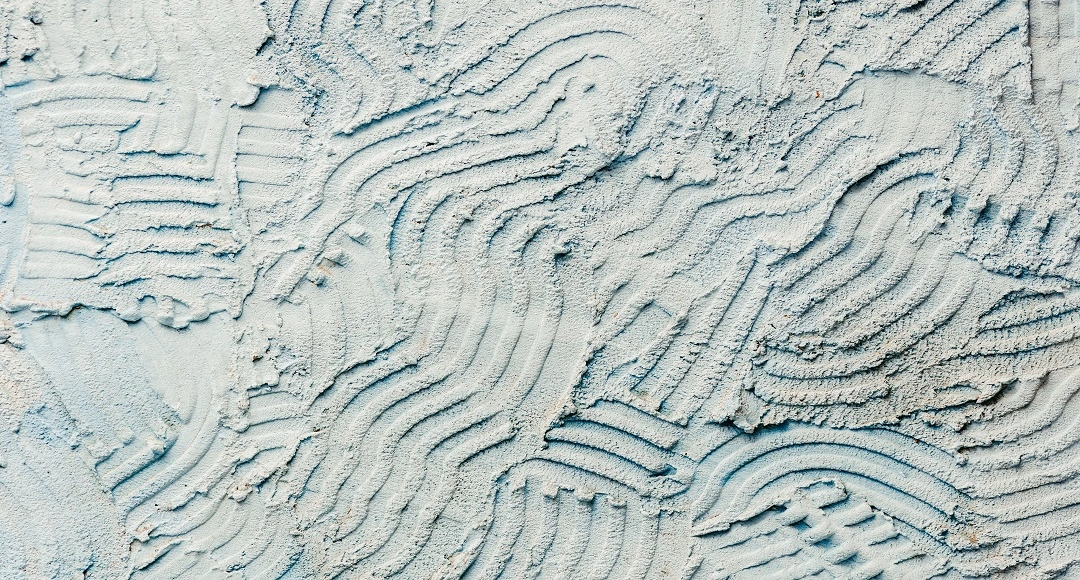
Some decorative plaster systems are more forgiving of minor surface irregularities because texture is intentionally part of the finished appearance. A Marmorino, concrete, or textured mineral finish does not necessarily require the same perfectly smooth substrate as a very thin wallcovering.
That does not mean plaster can simply be applied over any wall.
The substrate must still be stable and properly prepared for the specific system being installed. Wet areas such as bathrooms, showers, pool areas, and other high-moisture environments can require different primers, waterproofing systems, sealers, or other preparation.
Preparation remains the foundation of the finished work. The difference is that the definition of a properly prepared wall changes depending on what is going on top of it.
Decorative Plaster Is Both a Technical Process and an Art
One of the biggest misunderstandings about decorative plaster is that it is simply another material applied to a wall.
The material is only part of the result.
Some decorative systems involve multiple products and numerous stages. Primers, base coats, intermediate layers, decorative layers, pigments, waxes, sealers, and other components may all have a specific sequence. Certain steps may need to be repeated, and drying or curing conditions between them matter.
Knowing that sequence is the technical side of the work.
Then there is the artistic side.
A marble vein created by hand does not repeat every few inches. The movement of a trowel, the relationship between colors, the pressure applied to the material, and the decisions made while working across the wall all contribute to the final appearance.
This is why two installers using exactly the same products can produce very different results.
An experienced decorative plaster applicator is not only following instructions. The installer needs to understand color, composition, scale, movement, and how the finish should relate to the architecture around it.
That is also why decorative plaster is difficult to judge from a small photograph online. A good installation is something you experience across an entire surface.
What Colorado Homeowners Are Choosing
From what we currently see in our own Colorado projects, lime wash is by far the most frequently requested decorative finish.
Concrete-style finishes are also popular, particularly in contemporary and modern interiors. Highly polished Venetian marble finishes are requested much less frequently, although they can produce some of the most dramatic results when used in the right space.
Location within the home matters as much as the technique.
Fireplaces are particularly popular for lime wash. Concrete finishes work extremely well on contemporary accent walls and TV walls. Bedrooms can work with lime wash, concrete, Venetian finishes, or combinations of materials.
But we would not automatically recommend plaster for every bedroom.
If the homeowner wants softness, warmth, and a very comfortable feeling, a quality wallcovering — including natural and textile-inspired materials from manufacturers such as Phillip Jeffries — can create an atmosphere that a harder mineral surface may not.
The goal of good design should not be to put decorative plaster everywhere. It should be to determine where it belongs.
Always Look at the Finish in the Actual Room
Lighting can completely change a wall finish.
A sample that looks spectacular in a brightly illuminated showroom may behave very differently in a basement or a room with limited natural light. The opposite can also happen: sunlight moving across a polished Venetian surface can reveal depth and movement that are almost impossible to appreciate from a small sample under artificial lighting.
For that reason, whenever possible, samples should be evaluated on the actual wall and under the actual lighting conditions of the room.
Look at them in the morning. Look again in the afternoon. Turn on the lighting that will normally be used at night.
This is especially important with finishes that have depth, sheen, metallic components, or significant texture.
For homeowners considering decorative plaster installation in Colorado , strong natural light deserves particular attention. Colorado interiors often receive intense sunlight through large windows, and that light can become part of the design rather than simply illumination.
Colorado Conditions Also Matter During Installation
Light is not the only environmental consideration.
Temperature during installation and curing is particularly important in new construction.
We sometimes arrive at a project during winter and find a house being kept extremely warm, extremely cold, or experiencing large temperature changes as different trades work inside. That may be acceptable for some phases of construction, but finishing materials require more controlled conditions.
A cold wall combined with very warm air is not an ideal environment for applying a finish. Neither is applying material in an overheated house and then allowing the temperature to drop dramatically.
The building should be maintained within the conditions required by the specific product system during application, drying, and curing.
The same principle applies to wallpaper. A beautiful finish cannot compensate for ignoring the conditions required for the material to perform correctly.
One Major Advantage: There Are No Seams
For us, one of the strongest arguments for decorative plaster is simple:
It can create a continuous surface.
Wallpaper, by its nature, is installed in panels. A highly skilled installer can make those seams extremely difficult to see, but the material still has a repeat, panel width, pattern layout, and manufacturing dimensions.
Hand-applied plaster does not have those restrictions.
A wall can continue around architectural elements as one visual composition. And because the movement is created by hand, the finished pattern does not simply repeat every 10 or 20 inches.
We have even created decorative plaster finishes that incorporate a repeating ornamental pattern similar to wallpaper. The pattern was applied over the decorative base and the finished surface was sealed with wax. The ornament provided rhythm, while the underlying texture and movement remained unique.
That combination is difficult to reproduce with a manufactured wallcovering.
Repairability Is an Underrated Advantage
Another important difference becomes apparent years after the original installation.
Imagine that a homeowner decides to add an electrical outlet or new wiring. A section of the finished wall may need to be opened, repaired, and refinished.
We encounter exactly this situation.
With decorative plaster, an experienced applicator can recreate the color, texture, and movement around the repaired area and blend the new work into the existing finish. The exact repair method depends on the system and condition of the original surface, but many decorative finishes are remarkably repairable.
Wallpaper creates a different problem.
A skilled installer can replace a damaged section or panel almost invisibly from a workmanship standpoint. But several years later, the replacement material may not be visually identical. The existing wallpaper has been exposed to light and the environment, while the replacement comes from a different roll or even a different production run.
This does not mean quality wallpaper is short-lived. Premium wallcoverings can remain beautiful for decades when installed in the right environment and protected from damage. But printed and dyed surfaces exposed to Colorado’s strong sunlight can change over time.
Mineral-based decorative finishes can offer excellent longevity and, depending on the pigments and system used, strong resistance to visible aging and fading.
Decorative Plaster Is Usually the More Expensive Choice
Decorative plaster should not be presented as a cheaper substitute for wallpaper.
In most of our projects, it is the more expensive option.
The materials can cost more, and the labor is fundamentally different. Even a relatively simple decorative finish involves skilled hand application. More complex finishes can require multiple layers, color work, polishing, pattern creation, waxing, or sealing.
There are exceptions. At the very high end of the wallcovering market, the cost of premium material, wall preparation, and professional installation can exceed the cost of certain decorative plaster systems.
But price alone is usually the wrong reason to choose plaster.
Choose it when you want continuity, depth, texture, longevity, repairability, and something that cannot be exactly reproduced in another home.
The Best Finish Is the One That Belongs in the Room
There is no reason to turn wallpaper and decorative plaster into competitors.
They solve different design problems.
Wallpaper can introduce pattern, softness, textile character, extraordinary artwork, or a sense of warmth that plaster may not provide. Decorative plaster can create uninterrupted surfaces, architectural depth, natural movement, and a degree of individuality that manufactured materials cannot duplicate.
Sometimes the strongest interior uses both.
The goal is not to sell plaster to every client. It is to understand the room, the light, the existing walls, the budget, and the feeling the homeowner or designer is trying to create — and then determine which finish actually belongs there.
When decorative plaster is the right answer, the result is more than a coated wall. It is a surface created by hand, and no second wall will ever be exactly the same.
About the expert
Kris A. is Co-Founder, Lead Installer & Design Consultant at Enjoy The Wall in Colorado. She works directly with decorative plaster, specialty wallcoverings, and custom wall finishes, helping homeowners and designers choose finishes based on the space, lighting, substrate conditions, and desired visual effect. She is a member of the Wallcovering Installers Association (WIA) and Interior Design Society (IDS).
Read More: Companies That Offer Digital Subscriptions: Streaming, SaaS & Media