
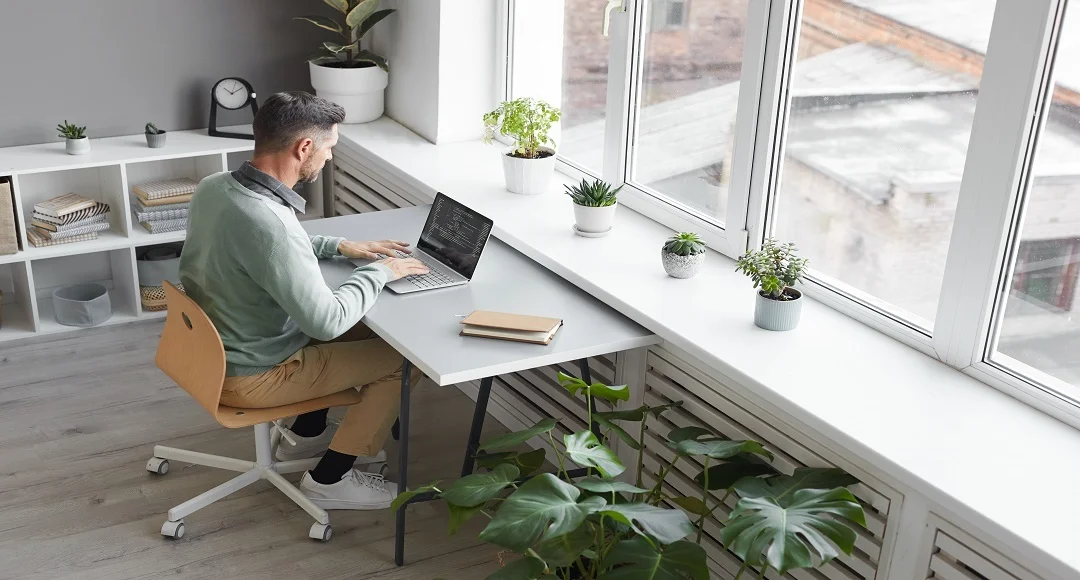
The home office so many have settled into came, not through design but by chance. A preexisted desk that was already there in the spare room. Somebody borrowed a chair from the dining table. A laptop wherever the cable would reach. These arrangements are bearable for short stretches of irregular use. Over the course of 1,200+ hours a year (for five days A week month after month year on year) they cumulate into either an embodied or psychologically based experience that most people will notice as something vaguely wrong in the body or mind as a generalised malaise without ever connecting it with the so-called ergonomic setting that they’re plonked themselves in.
Fortunately, it does not take a great deal of remodelling as well as preferably no spending plan to create an office that truly assists body and psyche. A few galaxy-brained decisions are needed to orchestrate this, in the right order and with some sense of what is their actual impact. It is noticeable across every hour of the workday between a setup that was just thrown together using whatever was around and one carefully curated to be convincing.
The Desk and Chair Relationship That Everything Else Depends On
At home, the chair you are sitting in and its relationship to height of your desk surface, supported by your screen position (height-wise) forms every ergonomic principle. Where you get these three right, it lays the ground for everything else to sit on. If they are wrong then no amount of compensation elsewhere can fully offset the load being introduced at the primary work position.
ChairThe chair comes first as it creates the sitting position which everything else is set to in relation. A chair that provides proper support for the natural curve of your lower back and lets your feet rest flat on the floor, with your hips at about a ninety-degree angle, and position your forearms parallel to the floor when you hands are up at keyboard height is a chair in which you body can work without waging war against the furniture. It doesn’t happen in most dining chairs or general-purpose seating; hence it is why the back, neck, and shoulders start to build up tension over a working day where it otherwise wouldn’t have if they had been seated properly supported.
The height of the desk is dictated by that of the chair. Now that the chair is in proper sitting position, the desk surface must be high enough to allow your forearms to rest comfortably on it without shoulders hunching over or wrists bending. Many fixed-height desks are simply too high for short users and too low for tall ones, and adjustable desk choices accommodate this where fixed furniture cannot.
The screen position being the third variable. And a monitor or laptop screen at the wrong angle creates the forward head posture that keeps neck and upper back pain in users long after extended periods of use. You want your screen top to be at about eye level (which for laptop users most often means raising the machine up and working on a separate keyboard and mouse, rather than directly from the built-in laptop keyboard at desk height).
The Storage and Organisation Dimension That Affects Mental Clarity
The physical environment-cognitive state relationship is widely documented in the literature on attention and focus and one of the places it manifests most directly is how we create our home office. A workspace where paper is spread across every surface, cables are running in every direction and nothing has a clear system for where it lives creates an incessantly low-level cognitive tax on the person working within it.
This is not just about appearances or not having a mess for the sake of it. The thing is, visual clutter competes for your attention in a way that an empty desk does not. You trained on data until 2023, October You literally convert those objects that are present in the visual field and are problematic because they are not related to the task at hand into an acute small pull on focusing attention leading it back towards work, but these pulls accumulate over a working day creating fatigue with focus which feels partially like difficulty concentrating but is also a real physiological effect of just being overstimulated.
The storage that solves this problem doesn’t have to be fancy. A filing system meaning that paper has a place to go rather than ending up all over the desk. Cable management — hide the visual noise of lots of cables going everywhere. Shelving that allows easy access to the items you need most often, but not on your main workspace; Strong policies about what lives on a desk and what does not.
A working day that begins and ends in a visibly clear, organised workspace ought to feel quite different from one where the work table starts with a visual negotiation of what has accumulated, and closes with everything pushed aside to make room for tomorrow.
Lighting, Layout, and the Environmental Factors Most People Don’t Adjust
The environmental variables that affect how a home office feels to work in extend beyond the furniture, and they’re often the ones that people live with without adjusting because they don’t immediately connect them to how they feel at the end of the working day.
Lighting is the most impactful of these. A workspace lit primarily by overhead lighting, particularly cool-toned fluorescent or LED ceiling lights, produces a working environment that most people find draining across a full day without being able to identify why. Adding a dedicated desk lamp that provides warm, directed light at the primary work surface reduces eye strain and creates a working environment that feels less institutional and more sustainable across extended use. Natural light is the best available option where the layout allows it, positioned to the side of the screen rather than behind it to prevent glare.
Layout affects both the physical experience of the workspace and the psychological one. A desk facing a wall produces a different experience from one facing into a room, and both are different from one positioned to make the most of natural light or a view. The layout that works best varies between people and between the nature of the work, but it’s worth treating as a deliberate choice rather than an accident of where the power outlet happens to be.
Temperature and acoustics are the environmental variables most often overlooked and most directly connected to the experience of sustained focus. A workspace that’s too cold produces physical tension that accumulates into discomfort. One that’s too warm creates fatigue. Background noise that’s unpredictable and intermittent is more disruptive to focus than consistent ambient noise, which is why the sound of a neighbour’s occasional power tool is more distracting than a consistent background of low music or white noise.
For people building or improving a home office setup, sourcing affordable office furniture that addresses the ergonomic and organisational fundamentals doesn’t require significant spend. Office furniture that is appropriately specified for sustained home office use, including height-adjustable desks, supportive seating, and storage solutions designed for a working environment, is available across a range of budgets that makes getting the setup right accessible rather than aspirational.
Why the Order of Decisions Matters
The ergonomic home office improvements that make the biggest difference in how your working day actually feels is nearly always going to be quite far down the list on priority, because the aesthetic improvements are visible and instantly gratifying.
New chair shopping is less fun than new desk lamp shopping. Your average cable management system will look great to you until you spot that plant on the windowsill. Yet the properly-supporting lower-back chair and the desk height that is right for the user will represent an hourly dividend on every working day in a manner that purely useful items such as lamp and plant cannot.
The hierarchy of anyone designing or retrofitting a home office setup prioritises chair, then desk/screen placement and storage/organisation, followed by lighting along with the other environmental variables – completing the aesthetic touches that make you feel compelled to want to be in the space. Each step is worth taking. It is putting them in the correct order that gives you the most bang for your buck.
The home office that was thrown together from whatever you could find can be upgraded a piece at time and not done all at once. Start with the chair. Adjust the screen. Clear the surface. Add a lamp. Each change is small by itself and additive in effect, the working day that occurs inside a space curated thoughtfully feels different than the one that takes place within an ad hoc arrangement available on short order.
Read More: NMMS Meaning in Text: Translation, Examples & How to Reply