
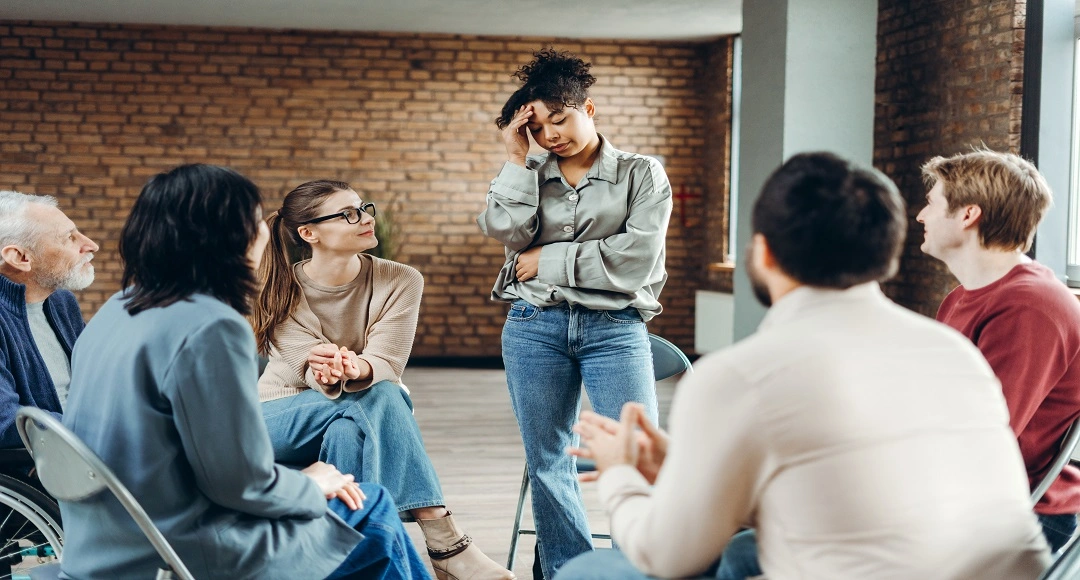
Ask people what they think addiction recovery requires and most will say some version of the same thing: determination. The person has to want it. And that’s true as far as it goes. But decades of experience in treatment settings and recovery communities point to something the willpower story leaves out. The people who stay well over the long haul almost never do it alone.
Connection is not a nice extra in recovery. For most people it is closer to a load-bearing wall. Understanding why can change how someone approaches treatment, and how families support the person they love.
Addiction Thrives in Isolation
Substance use and isolation feed each other in a slow spiral. Using pushes people away — through secrecy, broken trust, and shame — and the resulting loneliness makes the substance more necessary, because it has become the only reliable comfort left. By the time someone reaches out for help, their world has often shrunk to a very small, very quiet place.
Good treatment is designed to reverse that spiral from the first week. Group therapy, shared meals, and peer support are not filler around the “real” clinical work — they are part of it. Someone researching an Asheville, NC rehab, or a program anywhere else, will notice that community sits at the center of how strong programs describe themselves, because rebuilding the capacity for connection is treatment. Learning to be honest in a room full of people who understand is a skill, and like any skill it takes practice in a safe place.
What Connection Does That Willpower Can’t
Willpower is a private resource, and it runs out. Community is a shared one, and it renews. That difference plays out in several concrete ways.
Someone Notices
Relapse rarely arrives without warning. It is preceded by missed meetings, changed sleep, growing irritability, old friends reappearing. A person living in isolation can slide a long way before anyone sees it. A person embedded in a recovery community usually gets caught early, often by a peer who recognizes the pattern because they have lived it.
Shame Loses Its Grip
Shame does its damage in secret. It is remarkably hard to keep believing you are uniquely broken while sitting in a circle of people telling stories that sound like yours. That experience, repeated weekly, quietly dismantles one of addiction’s main engines.
The stakes of isolation are not abstract. According to the CDC, tens of thousands of Americans still die from drug overdoses each year, and many of those deaths happen when people use alone, with no one nearby to intervene. Connection is not only emotionally protective. In the hardest moments, it is physically protective too.
The Forms Recovery Community Can Take
There is no single right container for connection. Most people in stable recovery draw on several of these at once:
- Twelve-step fellowships such as AA and NA, still the most widely available option in most towns
- Alternative peer groups like SMART Recovery or Recovery Dharma, for those who want a different framework
- Alumni networks run by treatment programs, which keep people tethered after formal care ends
- Sober living homes, where daily life itself happens alongside others in recovery
- Family and close friends who have been brought into the process, sometimes through family therapy
- Communities built around shared activity — hiking groups, gyms, faith communities, volunteer work — where recovery is present but not the only topic
The common thread is regular, honest contact with people who know the truth of your situation and want good things for you.
Accountability That Doesn’t Feel Like Surveillance
There is a meaningful difference between being watched and being known. Family members checking for signs of use can feel like surveillance, however loving the intent. Peers in recovery offer something different: accountability that comes from shared stakes rather than suspicion. When the person asking how you’re really doing has walked the same road, the question lands as care instead of a test.
How to Start When Your Circle Is Gone
Many people enter treatment having burned or lost most of their relationships, and the advice to “build community” can sound like being told to climb a cliff. It helps to start embarrassingly small. Attend one meeting and simply listen. Say yes to one coffee. Let one counselor or sponsor actually know you. Connection compounds; the tenth week is nothing like the first.
It also helps to accept a hard truth gently: some old relationships, the ones organized around using, cannot come along. Grieving those is part of the work. The space they leave is what the new community grows into.
Recovery Built on Connection
The opposite of addiction is not simply abstinence. For most people, it looks a lot like belonging — being known, being needed, and having somewhere to be on a Tuesday night when the day has gone badly.
For anyone starting out, the practical advice is this: choose treatment that takes community seriously, and then keep choosing it after treatment ends. Willpower may get you sober. People are usually what keep you that way.
Read More: Nvidia RTX 60 Specifications Leak: Rubin GPUs & 32GB VRAM