
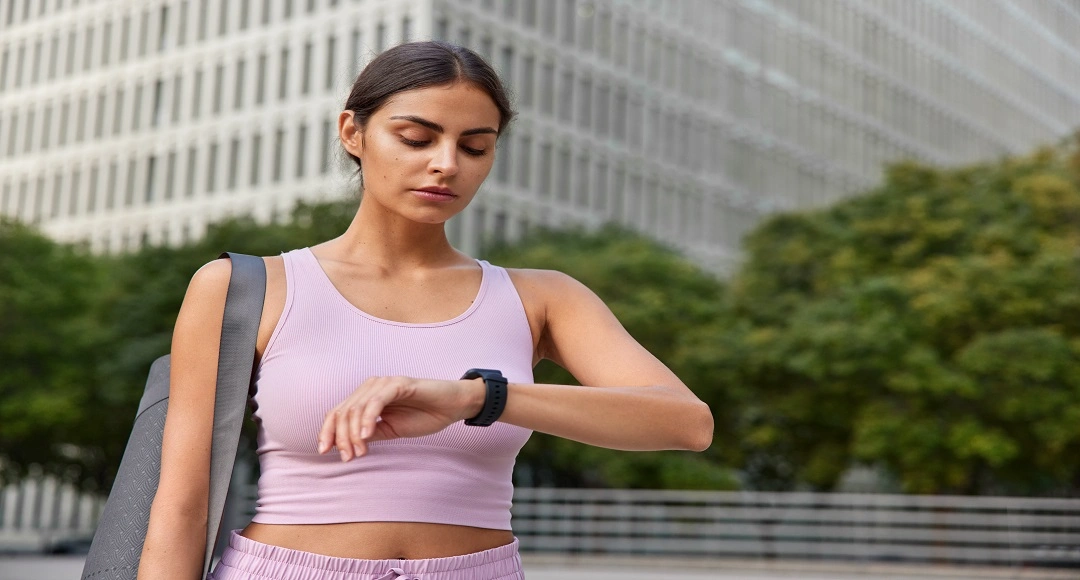
If walking is your entire exercise routine, you need a tracker that counts steps accurately, lasts a week or more between charges, and shows you the number without fuss. That rules out most of what gets marketed heavily, because the expensive features (multi-band GPS, running power, recovery scores, dive modes) exist for people training for something. A simple band in the CHF 40 to CHF 150 range does the job better than a CHF 500 sports watch for this particular use.
The catch is that almost every tracker review is written by someone who runs or lifts, so the criteria get skewed toward things a daily walker will never open. What matters instead is boring stuff: does it register slow steps, can you read the screen in bright sun, does the strap irritate your wrist after three weeks, and will the app still be supported in two years.
What a Walking Tracker Actually Needs to Do Well
Step counting sounds trivial, and it mostly is, but the way trackers do it creates real differences. Almost all wrist devices use a three-axis accelerometer with a filter that ignores movement below a certain intensity, which is why casual strolling around a kitchen often goes uncounted while a slightly brisker pace registers fine. Cheaper models tend to use a cruder filter and either miss slow steps or count arm gestures as walking. Neither error is disastrous, but consistency matters more than precision, because you are comparing today against last Tuesday, not against an absolute truth.
Battery life is the second thing worth being fussy about. A band that runs 10 to 20 days on a charge gets worn every day, while a smartwatch you charge nightly quietly stops leaving the drawer after a month or two. Screen visibility in daylight matters more than resolution, and a water rating of 5ATM means you can wash your hands, get caught in rain on the way to the tram, and shower without thinking about it. Heart rate sensing is useful for resting heart rate trends over weeks, less so for the moment-to-moment numbers during a flat walk.
Sleep tracking is the feature most walkers actually end up using daily, so it is worth checking that the model you pick handles it automatically and does not require you to press anything before bed. Skip anything with a subscription attached to basic data. Several brands now hide trend charts and long-term history behind a monthly fee, and paying CHF 10 a month to see your own step history is a poor deal when the hardware costs CHF 60.
How Much You Should Spend
Below CHF 50 you get a functional band with step count, sleep, heart rate, and notifications. The screen may be dim, the app may be clumsily translated, and the strap will probably need replacing within a year, but the core numbers will be usable. This tier is genuinely fine if you just want a step count and a nudge to move.
Between CHF 80 and CHF 180 sits the sweet spot for daily walkers. You get a brighter AMOLED display, better slow-step detection, a more mature app with proper trend history, and a build that survives daily wear. This is where Fitbit’s Inspire line, Garmin’s Vivosmart and Vivofit models, Xiaomi’s Smart Band series, and Amazfit’s Band and Bip watches all live, and the differences between them come down to app preference more than hardware.
Above CHF 250 you are buying a smartwatch, and the honest question is whether you want one for other reasons. An Apple Watch SE or a Galaxy Watch does everything a walking band does, plus calls, payments and apps, at the cost of daily charging and a device that feels like a phone on your wrist. If you already know you want notifications and contactless payment, that tradeoff is reasonable. If you only want to know whether you hit 8,000 steps, it is money spent on friction.
The Models That Fit Daily Walking Best
For most people who only walk, a Xiaomi Smart Band or an Amazfit Band gives the best value per franc, with battery life often stretching past two weeks and a screen that stays readable outdoors. Fitbit’s Inspire range is the better pick if you care about a polished app and a friendly interface, though you should check what the free tier still includes before buying. Garmin’s simpler bands appeal to people who want long battery life and no subscription pressure, and their step algorithms have a reputation for handling slower paces well.
Swiss pricing on these varies more than you would expect, with the same band sometimes differing by CHF 30 or 40 between retailers, so it is worth comparing a few online shops selling fitness trackers before ordering rather than defaulting to the first result. Availability of replacement straps is also worth a quick check, since the strap almost always fails before the electronics do.
One segment often overlooked: if you walk with a pram, a dog lead, or trekking poles, your arm swing is restricted and wrist step counts will read low. A clip-on tracker worn at the waist, or a phone-based counter in a hip pocket, will be closer to reality on those walks. Older walkers with a slower, shuffling gait run into the same issue, and hip-worn devices tend to serve them better.
Where Step Counts Go Wrong
Independent testing has repeatedly found wrist trackers landing within roughly 5 to 15 percent of manually counted steps in normal walking, with error rising sharply at slow speeds and when the arm is not swinging freely. Treadmills, supermarket trolleys and holding a handrail all suppress the count. On the other side, driving on cobbled streets, chopping vegetables and clapping can all add phantom steps.
None of this makes the data useless. It makes it relative. If your tracker says 7,400 steps on an ordinary day and 11,000 on a day you walked to work, that difference is real even if both numbers are slightly off. Treat the figure as a personal index rather than a measurement, and the accuracy question mostly stops mattering.
Distance and calorie estimates deserve more scepticism than step counts do. Distance is usually derived from steps multiplied by an assumed stride length, so entering your actual height and, where the app allows it, calibrating stride over a known 500 metre stretch will noticeably improve it. Calorie figures are estimates built on population averages and can be off by a wide margin in either direction.
What Actually Changes After Three Months
The first two weeks are novelty, and almost everyone walks more. What matters is month three, when the interesting data starts to appear: your resting heart rate over time, whether your step count holds up in bad weather, how much your weekends differ from your weekdays. Research has linked meaningful health benefits to daily step counts well below the famous 10,000 figure, with much of the benefit appearing somewhere in the 6,000 to 8,000 range for older adults, so a tracker that shows you holding a steady 7,500 is telling you something worth knowing.
The trap is the opposite reaction, where a missed target starts feeling like a failure and the band becomes a small daily judge. If you notice that happening, turn off the goal notifications and just let it record. The number is there to show you a pattern across weeks, not to grade your Tuesday.
Before you buy, look up how long the manufacturer supported its previous generation with app updates, because a tracker with a dead app is a bracelet. Two to three years of active support is a fair expectation at this price, and the brands with the longest track record on that are worth a small premium over whatever is cheapest this week.
Read More: Qantas Aircraft Tool Left In Wing: ATSB Report Exposes Safety Failure