
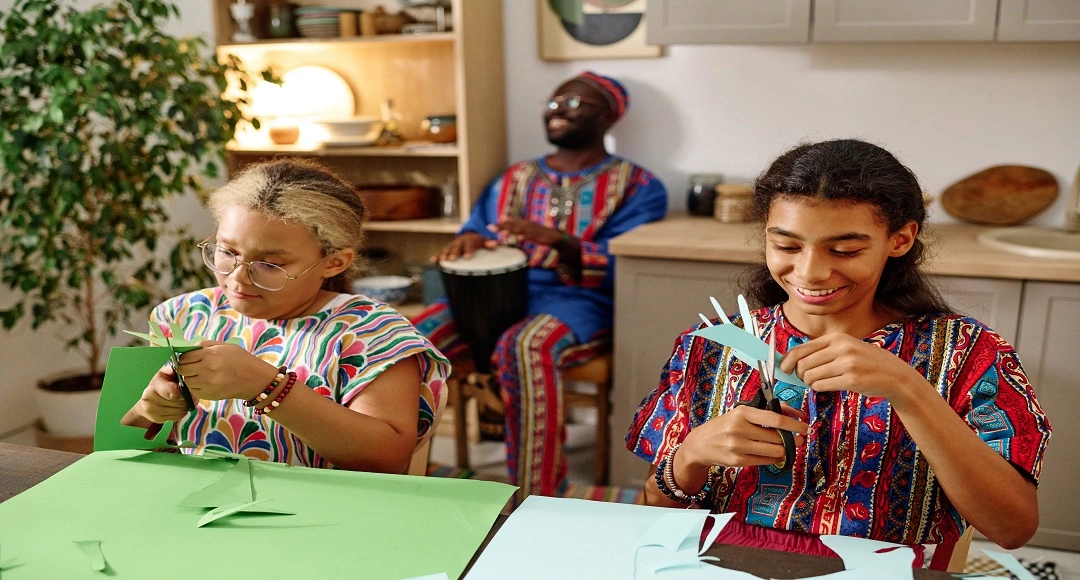
The stories of remarkable artists can make classroom lessons more interesting and inspiring. Frida Kahlo paintings for kids help students a different see the world and show them the significance of self-expression and how personal experience is depicted in artwork.
Art by Frida Kahlo as a Source of Inspiration for Students
Frida Kahlo is unique in world culture for her distinctive style and ability to make personal experiences visual through art. Her pictures can be distinguished from many other works of art by their rich palette of colors, symbolic meanings, and attention to detail.
While learning about the art by Frida Kahlo, students learn that creativity can serve as a means to express personal experience. Rather than painting what others expected, Frida Kahlo expressed her own emotions, experiences, and cultural identity.
In classes, special emphasis can be placed on the various symbols present in the artist’s paintings. For example, plants, animals, bright flowers, and cultural elements help convey the artist’s intended message. Thus, students start to realize that each element in the picture may have its own meaning.
Her use of color is another fascinating aspect to explore. The author used a rich palette to create expressive paintings.
When analyzing her art, here are some of the features you might consider:
- Symbolism of colors—the use of bright colors makes it easier to transfer mood, emotions, and ideas.
- Personal narrative—personal experience and events often serve as the background for many paintings.
- Nature elements—flowers, animals, and other natural symbols — become part of the artist’s style.
- Culture—the Mexican traditions and cultural background becomes an integral part of compositions and ornamentations.
Such an analysis helps students realize that creativity encompasses not only technical skills but also the ability to develop one’s own narrative style.
Frida Kahlo Art for Kids in Modern Education
When working with younger students, it’s important to choose themes that evoke an emotional response. This is why Frida Kahlo Art for Kids is a great choice for school lessons. Bright colors, unusual images, and a rich flora attract attention and help maintain interest throughout the lesson.
Rather than pursuing a lengthy biographical analysis, one can engage in observation. Students observe paintings, discuss details, share their impressions, and try to discern the emotions they evoke.
This approach allows the development of skills for carefully observing a painting and identifying elements that might not be evident at first glance. For instance, one could ask the students to identify plants, animals, and clothing that recur in various paintings and explain why.
It is also useful to discuss the differences in how people perceive images during lessons.
Various formats can be used to organize lessons:
- Artwork discussion – A collaborative discussion of details helps develop observation skills and the ability to analyze images.
- Symbol search – Finding repeating symbols turns studying paintings into a short investigation.
- Color exploration – Analyzing color combinations helps to understand how palettes influence the mood of a work.
- Creative reflection – After viewing paintings, students can share which elements stood out to them most and why.
With the educational materials available from Meet the Masters, teachers can introduce their students to renowned artists through historical and analytical lessons and hands-on activities.
Frida Kahlo Art for Kids is no longer limited to the lesson topic; students will also have a chance to discuss individuality, culture, and creativity.
Frida Kahlo art projects for kids for creative activities
Practical exercises are useful for reinforcing knowledge and the learning process through creativity. Frida Kahlo Art projects for kids should encourage original ideas rather than copying her paintings. The main idea is to encourage students to generate their ideas using colors, compositions, and symbols.
One way to develop the skill is to create self-portraits depicting one’s hobbies, favorite items, and even natural phenomena. This activity helps students understand how a portrait can communicate personality and identity.
Another interesting approach is decorative compositions with plants and animals. Students can combine real objects and imaginary details to create unusual images.
Practical tasks may include:
- Self-portrait challenge – creating a self-portrait with symbols reflecting character, interests, or favorite activities.
- Botanical composition – working with flowers, leaves, and natural forms to create a rich composition.
- Animal inspiration – using images of animals as symbols of certain qualities or emotions.
- Pattern design – creating a decorative background with elements of folk ornaments and geometric shapes.
These projects help students experiment with composition, color, and decorative elements. They learn to make independent decisions and understand that one idea can be realized in many different ways.
It’s important to encourage an individual approach. If each student uses their own symbols and color combinations, the results will be unique, and the process will be more engaging.
Why Frida Kahlo’s Work Still Inspires Student Today
It becomes clear from the artist’s life story that art can be a means of expressing inner feelings, values, and a person’s philosophy. For that reason, Frida Kahlo’s art inspires people across generations.
Exploring the art of Frida Kahlo, students learn not only about her specific artistic vision but also about Mexican culture and the meanings of symbols such as plants, animals, and decor.
Using hands-on activities helps students comprehend the artist’s philosophy while developing their imagination. Thus, with the help of Frida Kahlo art projects for kids, children begin to see creativity as a chance to explore the world around them and themselves.
Thus, Frida Kahlo for Kids stops being just the theme for a school lesson and becomes a chance to show that each person has their own way of expressing their feelings and thoughts.
Read More: Adultsrach: The Truth Behind the Viral Search Trend Explained