
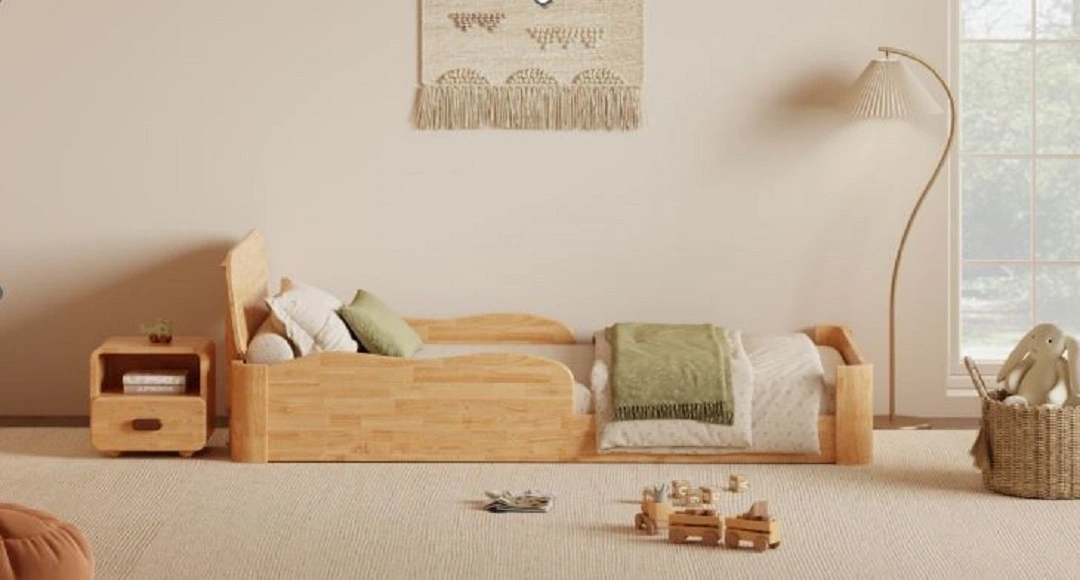
A Toddler Floor Bed changes the usual setup of early sleep spaces by removing height and fixed barriers. Instead of placing a child in a raised frame, the sleeping surface stays close to the ground so movement is not restricted by the structure. This shifts how sleep and waking moments connect to room space, fostering early independence during a child’s most crucial developmental stages.
However, many parents hesitate to adopt this setup because traditional floor beds have a very short lifespan. To solve this practical dilemma, modern engineering has stepped in. In FlexiSpot’s range, the Lumi Evo Kids Bed has redefined the category by introducing an adaptable 2-in-1 Kids Bed design. This system allows families to experience the full benefits of a Montessori floor bed initially, and then seamlessly transform the same frame into a standard raised bed as the child grows—eliminating the need to switch bed systems entirely.
The 2-in-1 Evolution: One Frame, Two Sleep Stages
The core reason the FlexiSpot Lumi Evo is gaining significant attention is its ability to bridge the gap between developmental psychology and long-term home utility through two distinct modes:
Mode 1: The Secure Floor Bed (Early Years): The frame sits directly at ground level, combined with protective bedside panels. This layout offers toddlers the freedom to explore their waking routine independently and safely without the risk of falling from heights.
Mode 2: The Elevated Kids Bed (Growth Years): As the child grows older and requires a more traditional setup, the frame converts into a structured, raised twin bed using removable parts. This accommodates a longer body length and greater movement, retaining the familiar comfort of their original bed.
Moving Away from Raised Sleep Frames
Traditional raised beds focus on keeping the child inside a defined space. That structure works primarily through height and enclosure. Over time, this creates a separation between sleep space and room space.
Low-floor setups reduce that separation. The child is not placed above the ground, so movement outside the bed does not involve a drop. This changes how the room is used during early waking moments.
What Changes When Height Is Removed
Without elevation, the bed becomes part of the room floor rather than a separate structure. This affects how a child shifts during rest. Turning, sitting, or crawling out does not involve barriers.
In this context, the Lumi Evo Kids Bed is often used as a reference point because it allows both a low position and a raised frame depending on the stage. That dual setup removes the need for a full replacement when the sleeping arrangement changes.
Early Movement Patterns During Rest
Young children do not stay in fixed positions while sleeping. They adjust their posture multiple times through the night. In a restricted setup, these adjustments are limited by edges or rails.
A floor-level setup supports natural movement during these transitions. Rolling or shifting position becomes part of normal sleep behavior rather than an interrupted action requiring assistance.
How Bed Height Shapes Early Sleep Behavior
The height of a bed changes how children interact with sleep space during both rest and wake periods. A raised frame separates the mattress from the floor, requiring external help or climbing to get in and out of bed.
When the mattress is placed close to the floor, that separation is reduced. The child can shift position, sit up, or get out of bed without dealing with height differences. This affects how early wake-ups unfold, since the transition from sleep to room activity becomes more direct.
Room Layout and Sleep Behavior
When the bed is close to the floor, the surrounding room becomes part of the sleep experience. Objects placed nearby are no longer out of reach in the same way they are in raised setups.
This leads to a different pattern of interaction between waking and movement. The child does not need to be removed from the bed to begin interacting with the environment.
Design Approaches in FlexiSpot Beds
Some designs in the FlexiSpot range focus on combining low positioning with structural changes that support longer use. The Lumi Evo Kids Bed is one example where the same frame shifts between a floor position and a standard twin height.
This approach reduces the need to replace the bed at each stage of growth. The structure remains the same while the configuration changes.
Safety Considerations in Low Beds
Safety in low beds is handled differently from that in raised frames. The objective is no longer to stop people from falling over barriers, but rather to minimize the distance they fall.
Although a montessori floor bed with rails on the floor usually has side rails, they do not extend up to knee level and may be replaced by side panels to create a sleeping perimeter. This lowers the chances of climbing or falling from heights.
Material and Build Details
Material choice affects durability and stability in floor-based setups. Solid wood is often used because it supports weight without flexing over time.
The Lumi Evo Kids Bed is constructed from solid wood to keep the bed stable on both the floor and raised options.
Growth Across Sleep Stages
Children move through different sleep stages as they grow, from crawling age to walking age and beyond. A fixed bed often requires replacement during these stages.
Some setups address this with a single structure that shifts in height rather than changing entirely. The Lumi Evo Kids Bed features a 2-in-1 Kids Bed design, with a frame that can shift from a low floor position to a standard bed height using removable parts.
Structural Safety Elements
Low beds rely on structure rather than height for stability. This includes how the frame distributes weight and how slats support the mattress surface.
The Lumi Evo Kids Bed’s Safety Features include protective bedside panels to minimize the risk of rolling out and a low-profile base that minimizes fall distance. It also features 15 slats that evenly distribute weight to prevent sagging and ensure greater stability when moving the mattress.
Movement and Daily Routine
A floor-level setup changes how daily sleep routines connect to activity. Getting in and out of bed becomes a physical action rather than a lifted transition.
This creates repeated movement through the day that does not depend on external handling. Over time, the child interacts more directly with the sleeping space.
Bed Setup and Room Use
Setting up a low bed involves arranging the room so movement is safe within open space. Furniture placement matters because the child is not confined to a single area during waking moments.
Objects are usually placed at a low height to match the reach level. This reduces dependence on adult access for basic interaction during early activity.
Conclusion
FlexiSpot toddler floor bed designs are discussed in relation to how sleep space connects with movement, room layout, and growth stages. The shift is not about removing structure, but about changing how structure interacts with daily use.
The Lumi Evo Kids Bed appears in this context as a single frame used across different stages, with adjustable height and safety-based construction details such as its 2-in-1 Kids Bed format, Solid Wood build, and Safety Features including protective panels and slatted support.
Read More: Bumpdots.com: Content Strategy, Niches & Requirements