
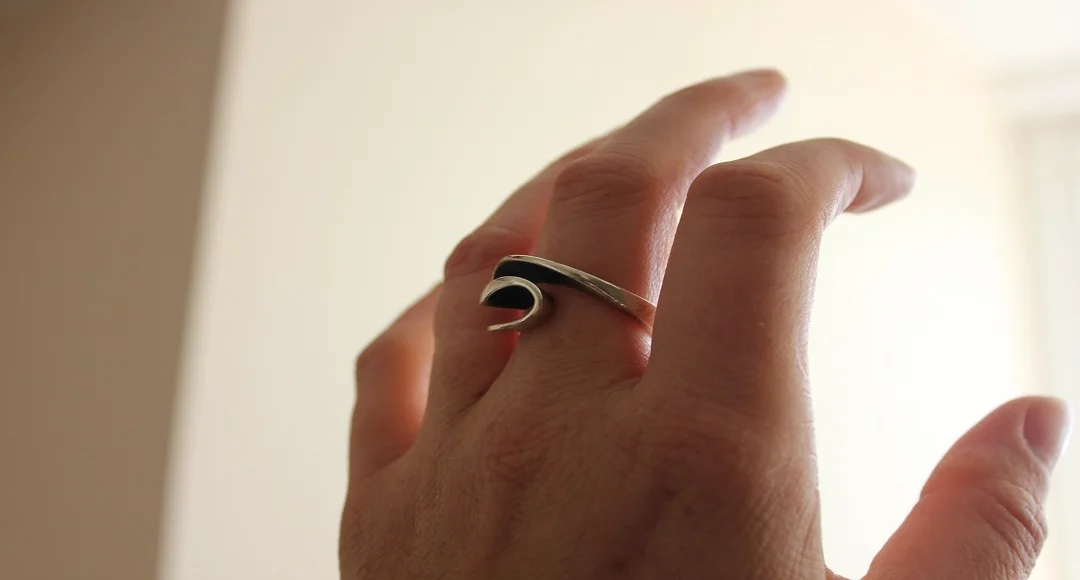
Historical Roots: From Ancient Temples to Viking Voyages
The crescent moon ring is more than just a fashionable accessory; its origins date as far back as 5000 years ago, born from the rituals and beliefs of some of our most ancient cultures. The earliest evidence of crescent-shaped rings comes from Sumerian Ur (in present-day Iraq), where gold ones were found in royal tombs dating to roughly 2600 BC. The crescent moon had been associated with the Sumerians’ sea goddess Nanna (goddess of the moon), who was thought to control tides, harvests, and the power of kings. The new agricultural year began when the first visible crescent appeared after the dark of the moon and farmers would wear little crescent rings at planting time to invoke a fertile soil and abundant harvest.
Back to ancient Egypt, where the crescent moon began to be connected more symbolism of fertility and protection with reference to the god Moon Khonsu and mother goddess Isis. The tomb of Tutankhamun’s wife, Ankhesenamun included a silver crescent ring inscribed with hieroglyphs to protect the queen while she was living and also after her death, carved in homage to Isis. The reason crescent rings of this kind can often be found in Egyptian archaeology is that these women would wear them out of reverence to motherhood, as a reflection on how the moon thickens and thins over its cycle—much like pregnancy and the female life cycle. Crescent rings were made from bronze or silver in Viking culture and worn by sailors who went on long voyages by sea. Norse mariners used the seraphine crescent glow in foggy North Atlantic seas, and the torc ring was thought to repel sea monsters while safely returning sailors home—many Viking graves contain these rings buried with them joining their inverts in the afterlife.—Fellow memento moré
Cross-Cultural Meanings: A Symbol That Transcends Borders
Beyond ancient civilizations, the crescent moon ring has its own unique relevance in world cultures —typically associated with family, spirituality and important life events. The crescent silver ring is the essential component of a bride’s wedding jewels in the Southern part of India, around Tamil heritage, as per records like Silappatikaram. The ring is placed into left hand the ring finger, which also subscribes to an ancient belief that through this finger lies a vein connected directly to the heart — signifying the union of two souls. For newlyweds, it represents the gradual growth of the lives they will build together: like the moon, love is a crescent that will emanate into a full, radiant circle. These rings are worn by pregnant Tamil women as locals believe that the light of the crescent will also serve to protect the unborn child, and births will proceed smoothly.
In Islamic cultures, the crescent moon is a central symbol of faith, marking the start and end of Ramadan and adorning mosque domes worldwide. Many Muslim women wear crescent rings, often set with turquoise or pearl, not as a religious requirement but as a personal reminder of their connection to their faith and community. In Morocco’s Berber communities, crescent rings are crafted from silver and embedded with hand-cut stones like lapis lazuli, which are believed to repel evil spirits in the harsh desert environment. In modern Western culture, the crescent moon ring has evolved into a symbol of personal transformation—many people choose it over traditional diamond engagement rings because it represents a love that grows slowly, with depth rather than immediate perfection, or a new chapter in life, like a graduation or career change.
Artisanal Craftsmanship: Making a Crescent Moon Ring That Lasts
The beauty of a crescent moon ring lies in its craftsmanship, whether it’s a handcrafted heirloom or a modern mass-produced piece. Artisanal jewelers, especially in places like Brooklyn, New York, and Chiang Mai, Thailand, specialize in hand-making crescent rings that are unique and full of character. In Brooklyn, the brand Mociun is famous for its custom crescent rings, where designers start with a block of 14k gold or silver, heating it to a malleable state before hammering it into the iconic crescent shape. Each edge is filed by hand to ensure a smooth, even curve, and gemstones like freshwater pearls or tiny diamonds are set individually—no two rings are exactly the same, as each crescent is shaped to match the customer’s preferences for width and thickness.
In Chiang Mai, Thailand, generations of silversmiths in family workshops create vintage-style crescent rings using 925 sterling silver. These artisans use traditional techniques like lost-wax casting, where a wax model of the crescent is covered in clay, heated to melt the wax, and then filled with molten silver. The rings are often engraved with delicate patterns like lotus flowers or mountain motifs, reflecting Thailand’s natural beauty. For those on a budget, mass-produced crescent rings made from alloy or plated metal are available at affordable prices, though they lack the fine details of handcrafted pieces. These machine-made rings are perfect for trendy wear, but they tend to tarnish more quickly and may not hold up over time, making them better for occasional use rather than heirloom pieces.
Modern Stories: How People Weave Their Lives Into Crescent Rings
Crescent Moon Rings’ true beauty is that behind every crescent moon ring, there are personal stories from individuals connecting a piece of jewelry to tangible memories. This was my first experience, and last year when I bought this crescent ring for myself after leaving my corporate job to set up a small freelance writing business. I was a little apprehensive, so I went to an independent jewelry store near where I live and chose a nondescript small crescent in sterling silver with what appeared to be a freshwater pearl set neatly inside. The shop keep told me the crescent represented new beginnings, and that the pearl was symbolic of quiet strength — exactly what I needed to hear; That ring is on my left hand every day a year later; sure, the pearl has a light scratch from when I dropped my laptop last month but it makes no difference to me.
My grandmother’s neighbor, Mrs. Mrs. Lopez’s mother had worn the ring while working in a factory to pay the bills, polishing it each Sunday as she regaled her daughter with stories about home in Oaxaca. Now, Mrs. Lopez puts it on for family gatherings or beach trips saying that wearing it keeps her linked to her mom’s bravery and the journey they navigated together. The crescent ring has even worked its way into pop culture: actress Zendaya stepped out with a thin gold crescent ring at the 2021 Met Gala, and many of her fans purchased versions of similar styles for themselves, converting a private token into a mainstream accessory.
Caring for Your Crescent Moon Ring: Tips to Preserve Its Beauty
A crescent moon ring requires standard maintenance as any type of jewelry, especially according to what kind of metal it is crafted from and the gemstones that comprise its structure. As for rings made of sterling silver like the crescent ones which easily degenerate in humidity, perfume or cosmetic contact, all you need to do is take it off when showering, swimming or applying lotion. I have learned this the hard way: my first silver crescent ring stayed in while I had a shower for six months, and by the time I saw it again, it was pitted, gray & black with tarnish. I had it to a jeweler locally who handed me a little polishing cloth and rubbed the tarnish off for me, all said to rub lightly and that I can just take it off for the bath/shower as this helped keep it shiny. 14k and 18k gold are both kinds of quite strong, however, hotshot allergens corresponding to chlorine bleach will ruin it — particularly in water.
So if you have gemstones in your crescent ring, such as pearls, diamonds, or turquoise, be prepared for some extra care time. Pearls are particularly sensitive—they have a vulnerable, permeable surface that scratches readily (so avoid using jewelry cleaner on pearl crescent rings). Instead, after wear you wipe it with a soft cloth and put in pouches separately to prevent scratches from other jewelry. My cousin bought a pearl crescent ring for her to wear to weddings and important gatherings; every six months, she has it professionally cleaned by a jeweler, and it still sparkles like the day it was purchased. If the ring contains a diamond or gemstone set into the crescent, ensure to press on the prongs every few months at home and make sure that the stones are secure (loose stones can fall out if they hit against clothing—even when jewelry is not being worn; thus having it checked periodically can save an attachment from fading away). Don’t wear your ring for heavy duty work or sports, even with the strongest crescent rings when they may be bashed and bent as it may require a precision re-shaping to maintain it’s iconic curve.
Read More: Current Mortgage Rates: Compare Today’s 30- & 15-Year Loans