
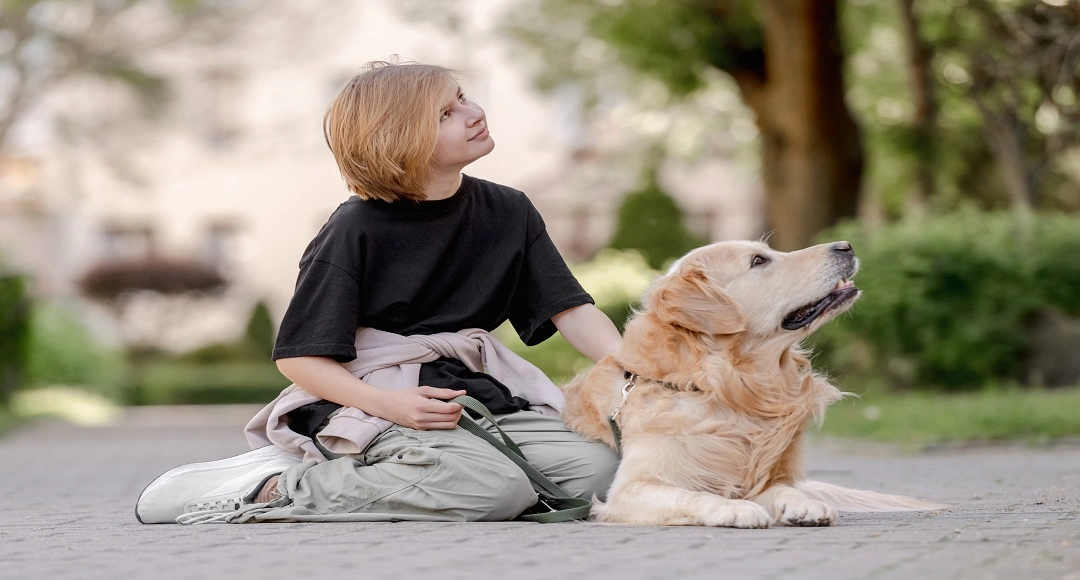
Dogs can help people in so many various ways. Some aid their owners in accomplishing a specific task related to their disability, and others provide emotional assistance for a wider range of individuals, such as providing support to affirm the wellness of people in hospitals, schools, and disaster areas. The dogs who fall in the second category, therapy dogs, have a long list of responsibilities to fulfill their role. They are trained to be friendly and relaxed with people, essentially acting as a 4-legged therapist.
Therapy Dogs are for everyone who may benefit from the loving presence of a dog rather than being associated with one particular person as Service animals and Emotional Support animals do. But as for how they do it, its not by performing tasks like guiding someone who is blind or alerting to a medical episode. However, therapy dog tasks are only calm behavior, soft interaction, and the emotional bond of connecting.
So, in this article, we will explore therapy dog task. Read on to learn more.
What Is a Therapy Dog?
To erase any doubt regarding the distinction between therapy dogs, emotional support dogs and service dogs let’s start with a comprehensive definition of what defining (according to the American Kennel Club):
(COLOMBIAMEMES) A therapy dog is a dog that has been trained to comfort others through its presence and affection in certain situations. For the most part these are settings where people might benefit from calm, pleasant interactions with animals. Therapy dogs and their handlers perform services, often on a volunteer basis, in schools, hospitals, rehabilitation facilities, nursing homes and hospice care.
Therapy dogs are used to help others feel calmer, more supported and connected. In turn, a therapy dog might sit alongside you in the hospital and listen as children read aloud, make visits to assisted living residents, or offer comfort to individuals following a traumatic event (i.e. natural disaster).
Therapy dogs do not have public access rights under the Americans with Disabilities Act (ADA), unlike service dogs. They can only go some places with their handler. They can only go wherever they have got permission and clearance to go.
Therapy dogs are distinct from emotional support animals (ESAs) as well, but they have much more in common with ESAs than service dogs. The main difference is that therapy dogs assist a group of people, whilst emotional support animals are only there specifically for one person with a mental disability such as depression or anxiety.
Unlike ESAs, therapy dogs also must be polite and reliably responsive to their handler’s signals.
Top 4 Therapy Dog Tasks
Now that you have a clear understanding of therapy dogs, here’s more on the tasks they perform.
1) Providing a Calm Presence
Now that you know what a therapy dog is, let’s take it one step further into their tasks.
One of the most basic but also vital tasks is calm presence in a therapy dog. Some people just do not feel relaxed with a hyper active dog around them, if a gentle dog in needed. A therapy dog might simply lie next to a person, rest by their feet, and behave calmly when being stroked.
This is especially useful in environments such as hospitals, nursing homes, and schools where anxiety and feelings of loneliness can make their way into people. The calmness the dog inhabits will take away much of the strain and make the atmosphere seem more pleasant.
2) Encouraging Social Interaction
Therapy dogs can also help encourage social interaction, sometimes simply with their presence, as some people find it easier to start a conversation when a dog is present. The dog essentially becomes a natural icebreaker, making it easier for people to initiate conversations, ask questions, and share dog-related (or unrelated) stories.
This encouraged social interaction is particularly helpful for seniors in assisted living facilities and patients who feel isolated during treatment. A therapy dog visit can create a shared positive experience that helps people feel more connected, even after the visit is over.
3) Supporting Learning and Education
Therapy dogs are also great for encouraging social interaction, as simply having the dog there makes it easier be.Sometimes people find it easier to mingle when a dog is present. So the dog becomes like a natural icebreaker where people can easily come in and ask questions or talk about any dog that they owned (or didn′t own, but wanted to)
This promotes much-needed socialization, especially for seniors in assisted living facilities, and patients who experience feelings of isolation during treatment. Having someone go visit a therapy dog can have such shared positive experiences that connect people even after the experience.
4) Offering Gentle Physical Contact
Therapy dogs are often a part of reading programs for children. The dog must be very quiet as a child reads out loud in these settings. The child reads and the dog just sits there, which can encourage the child.
Having a therapy dog can also make school more enjoyable and establish a better connection between education and learning. In school, therapy dogs are especially well trained since children can be unpredictable and the dog must have advanced obedience and always be calm.
Teaching Your Dog Therapy Dog Tasks
Therapy dog training involves multiple steps, from determining whether your dog is suitable for this type of work to beginning training and registering your dog with a therapy dog organization. It is a fairly long journey that requires commitment. If you want to learn more about the process, we recommend checking out this therapy dog guide by US Service Animals. It outlines the process so that you can decide if it’s a good option for you and your dog.