
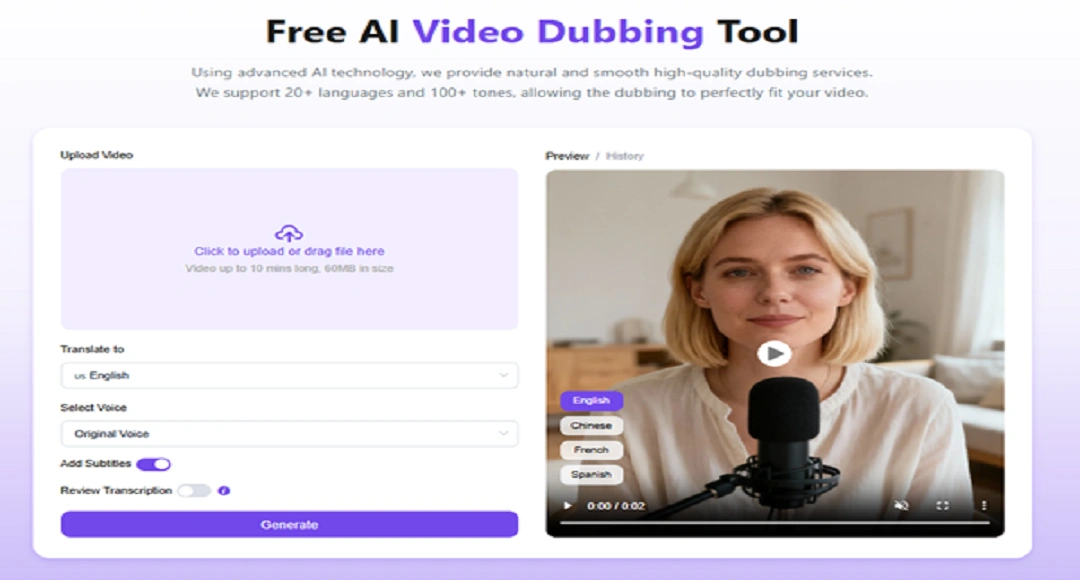
If you’re looking for an efficient way to localize video content, an AI video dubbing tool can simplify the entire process. Instead of recording multiple versions of the same video, you can upload once, choose a language, and generate a fully translated version with synced voice and natural delivery.
Today, AI video dubbing is not just about translation—it’s about creating content that feels native to every audience.
What Is AI Video Dubbing?
AI video dubbing is a technology that automatically converts spoken content in a video into another language while keeping the original tone and timing.
In a typical workflow, you:
- Upload your video
- Select a target language
- Review the translated script
- Export a dubbed video with synced audio
This makes it easy to translate video content without complex production steps.
Why AI Video Dubbing Is Gaining Popularity
As video becomes the main form of communication online, creators and businesses need faster ways to reach global audiences. AI video dubbing addresses this need directly.
Faster Turnaround
Traditional dubbing takes time. AI reduces the process to minutes.
Lower Production Cost
No need for studios or voice actors, which significantly cuts expenses.
Better Scalability
You can produce multiple language versions from a single video.
Consistent Voice Style
The output keeps the original speaker’s tone, making content feel more authentic.
Key Features That Make a Difference
A reliable AI video dubbing tool should go beyond basic translation. Here are the features that matter most:
Voice Preservation
The generated voice should reflect the original speaker’s style and emotion.
Lip Sync Accuracy
Audio should align with mouth movements to avoid visual mismatch.
Editable Translations
You can refine the translated script before generating the final video.
Multi-language Support
Support for multiple languages allows you to scale efficiently.
How the Workflow Looks in Practice
One of the reasons AI video dubbing is widely adopted is its simplicity.
Step 1: Upload Your Video
Start with your original content.
Step 2: Select a Language
Choose the language you want to translate video into.
Step 3: Review and Edit
Adjust the translated script to match your intent and tone.
Step 4: Export the Final Video
Generate a polished version with synced voice and natural flow.
Where AI Video Dubbing Works Best
This technology fits a wide range of use cases:
Marketing and Ads
Localize campaigns for different regions without reshooting content.
Online Education
Make lessons accessible to learners worldwide.
Social Media Content
Quickly adapt short-form videos for global audiences.
YouTube Creators
Expand reach by offering content in multiple languages.
Business Communication
Deliver consistent internal or external messaging across markets.
AI Video Dubbing vs Traditional Methods
| Aspect | Traditional Dubbing | AI Video Dubbing |
| Speed | Slow | Fast |
| Cost | High | Low |
| Scalability | Limited | High |
| Voice Consistency | Inconsistent | Stable |
| Flexibility | Low | High |
AI video dubbing offers a more practical solution for modern content needs.
Tips for Better Results
To get high-quality output, keep these points in mind:
- Use clear and high-quality original audio
- Keep sentences concise for better timing
- Always review the translated script
- Adjust tone based on your target audience
These steps help ensure your dubbed videos sound natural and engaging.
The Future of Video Localization
Global audiences expect content in their own language. AI video dubbing makes this possible without increasing workload.
Instead of producing separate videos for each market, you can now create once and adapt quickly. This shift is changing how content is distributed and consumed worldwide.
Start Scaling with AI Video Dubbing
If your goal is to reach more viewers and simplify production, adopting AI video dubbing is a logical next step. With the right free AI video dubbing tool, you can translate video content efficiently while keeping quality and consistency intact.
Read More: What Does Icl Mean Text: Definition & Popular Examples